America First? What Trump's startling arrest of Maduro tells us.

As it turns out, the "America First" slogan didn't mean PresidentDonald Trumpwould stop the United States from intervening around the world.

More:President Trump's stunning start: Reshape the government, remake the world

The capture of Venezuelan President Nicolás Maduro in Caracas on Jan. 3 and his pending arraignment in New York on charges of narco-terrorism are more evidence that this commander-in-chief is willing to assert U.S. economic, energy and security interests across the globe not only with forceful rhetoric but also with force itself.

"This was a very important symbol," Trump said in an interview on Fox News. "It said this thing, that we're not going to be pushed around by these countries." With elite military teams and cutting-edge equipment, he boasted, "Nobody can stop us."

Since his inauguration a year ago, a new Trump Doctrine has emerged.

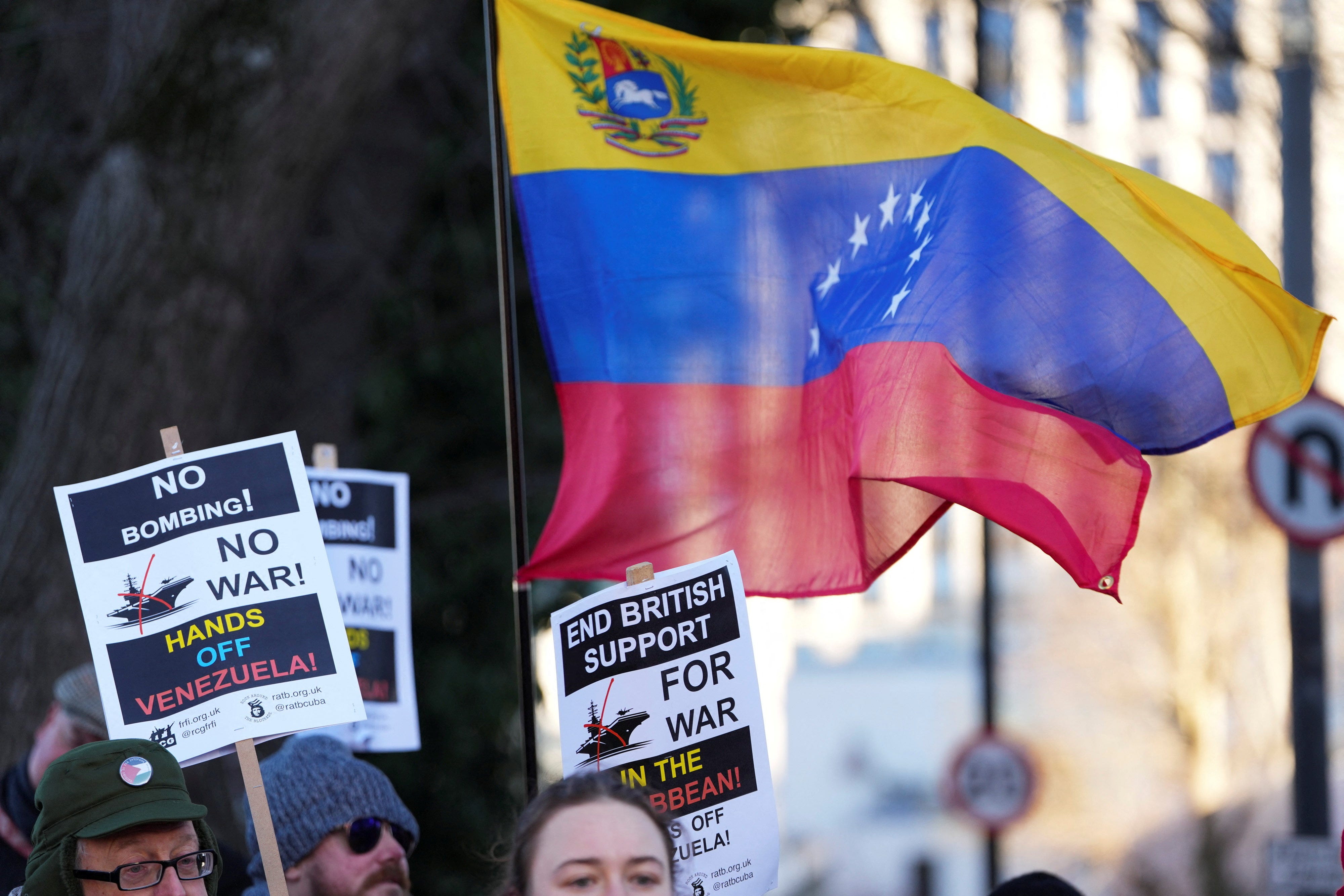
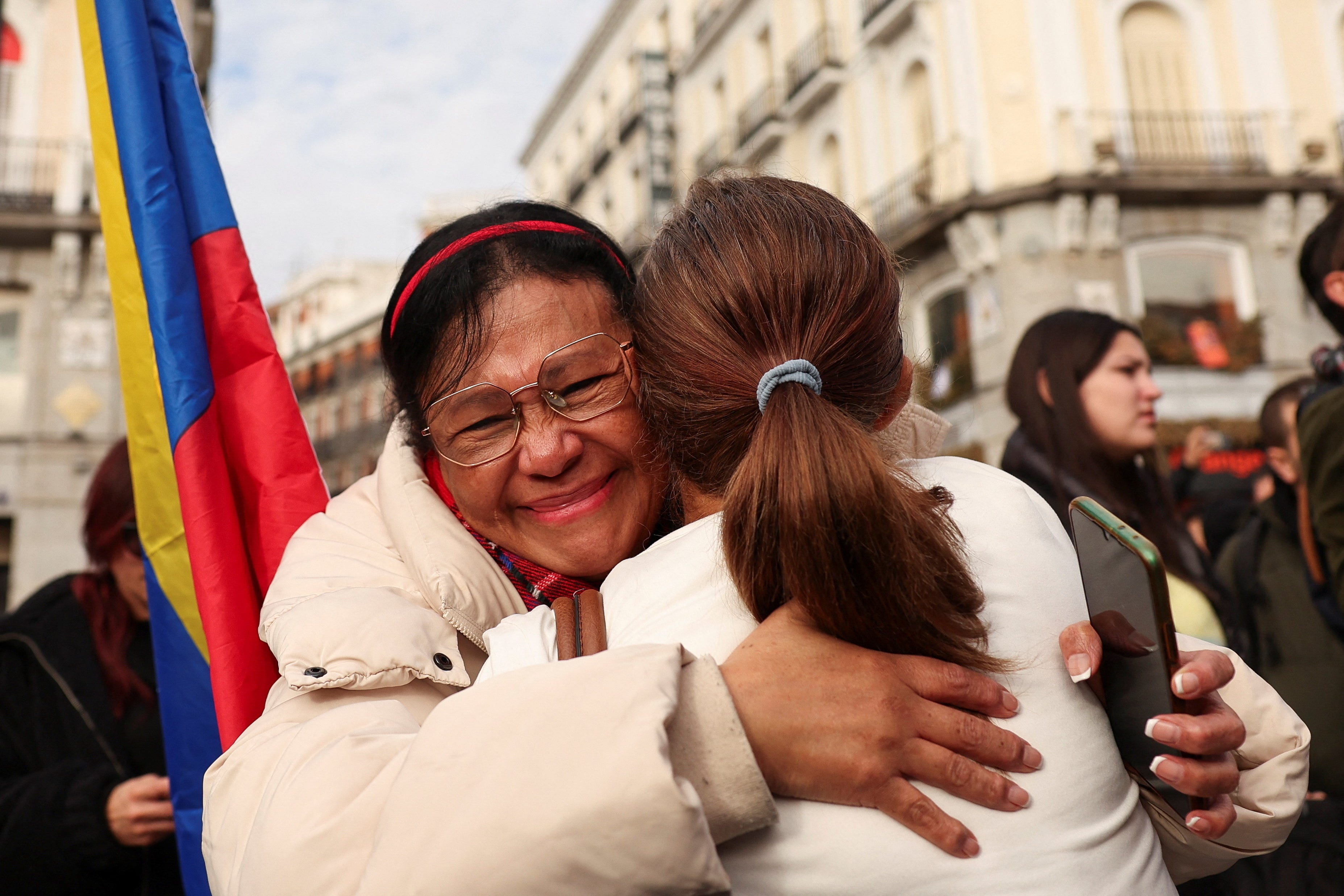
<p style=Reactions to the United States' bombing of Venezuela and capture of the country's president Nicolás Maduro ranged across the world. Some celebrated the operation while others rebuked Trump's intervention in the South American country. See the reactions in photos, beginning here with Venezuelans living in Chile celebrating in Santiago on January 3, 2026.

" style="max-width:100%; height:auto; border-radius:6px; margin:10px 0;" loading="lazy" /> A child holds a placard saying A woman reacts to the news after U.S. President Donald Trump said the U.S. has struck Venezuela and captured its President Nicolas Maduro, in Madrid, Spain, January 3, 2026. Armed supporters of Venezuela's President Nicolas Maduro gather near the Miraflores presidential palace in Caracas on January 3, 2026, after US forces captured him. A Venezuelan man living in Chile celebrates with a national flag and his car reading Venezuelans living in Chile celebrate in Santiago on January 3, 2026, after US forces captured Venezuelan leader Nicolas Maduro after launching a A man holds up a portrait of late Venezuela's leader (1999-2013) Hugo Chavez in Caracas on January 3, 2026, after US forces captured Venezuelan leader Nicolas Maduro. Activists of Socialist Unity Centre of India (SUCI) burn an effigy of US President Donald Trump during a rally in Kolkata on January 3, 2026, to protest against the recent US attack on Venezuela. A supporter of Nicolas Maduro holds a portrait of the Venezuelan President during a gathering near the Palacio de Miraflores in Caracas on January 3, 2026, after US forces captured Venezuelan leader Nicolas Maduro after launching a Venezuelans living in Chile celebrate in Santiago on January 3, 2026, after US forces captured Venezuelan leader Nicolas Maduro after launching a Venezuelans living in Chile celebrate in Santiago on January 3, 2026, after US forces captured Venezuelan leader Nicolas Maduro after launching a Demonstrators hold up a banner with the lettering reading 'Stop Trump - Free Venezuela' during a rally organised by left-wing 'Anti-Imperialist Coordination' (Antiimperialistische Koordination - AIK) under the motto 'Hands off Venezuela' at Vienna's Votive Park on January 3, 2026. The EU called for Demonstrators march with a banner with the lettering reading 'Hands off Venezuela' during a rally organised by left-wing 'Anti-Imperialist Coordination' (Antiimperialistische Koordination - AIK) in Vienna on January 3, 2026. The EU called for Venezuelans living in Peru celebrate outside the Venezuelan Embassy in Lima on January 3, 2026, after US forces captured Venezuelan leader Nicolas Maduro. President Donald Trump said Saturday that US forces had captured Venezuela's leader Nicolas Maduro after bombing the capital Caracas and other cities in a dramatic climax to a months-long standoff between Trump and Venezuelan. Venezuelans living in Peru celebrate outside the Venezuelan Embassy in Lima on January 3, 2026, after US forces captured Venezuelan leader Nicolas Maduro. President Donald Trump said Saturday that US forces had captured Venezuela's leader Nicolas Maduro after bombing the capital Caracas and other cities in a dramatic climax to a months-long standoff between Trump and Venezuelan. Venezuelans living in Peru celebrate at the Miguel de Cervantes park, near the Venezuelan Embassy in Lima on January 3, 2026, after US forces captured Venezuelan leader Nicolas Maduro. Venezuelans living in Peru dance to celebrate at the Miguel de Cervantes park, near the Venezuelan Embassy in Lima on January 3, 2026, after US forces captured Venezuelan leader Nicolas Maduro. A Venezuelan woman living in Peru celebrates with a national flag at the Miguel de Cervantes park, near the Venezuelan Embassy in Lima on January 3, 2026, after US forces captured Venezuelan leader Nicolas Maduro. Activists of Socialist Unity Centre of India (SUCI) protest against the recent US attack on Venezuela, in Kolkata on January 3, 2026. Members of the Communist Party of Britain (CPB) group hold banners outside the U.S. Embassy in London calling for People embrace next to a Venezuelan flag, as they react to the news after U.S. President Donald Trump said the U.S. has struck Venezuela and captured its President Nicolas Maduro, in Madrid, Spain, January 3, 2026.

See reactions after US explosions in Venezuela, Maduro capture

Reactions to theUnited States' bombing of Venezuela and capture of the country's president Nicolás Maduroranged across the world. Some celebrated the operation while others rebuked Trump's intervention in the South American country. See the reactions in photos, beginning here with Venezuelans living in Chile celebrating in Santiago on January 3, 2026.

On his watch, the United States has cited a variety of reasons for bombing a half-dozen countries, including a Christmas Day strike in Nigeria in response to what he described as attacks on Christians.

He has hit Iran's nuclear sites with bunker-busting bombs, a step that previous presidents had refused to take despite Israeli entreaties. The day before the Venezuelan operation that captured Maduro, Trump warned Iran that if peaceful protesters on its streets were killed, the U.S. was "locked and loaded and ready to go" to rescue them.

That threat "is everything we voted against in '24," said former MAGA loyalist Marjorie Taylor Greene, now a Trump critic.

She was referring to "America First," a slogan Trump used in all three of his presidential campaigns. Greene and other core supporters interpreted that as a pledge to avoid foreign entanglements, especially those that could risk "endless wars" like those in Iraq and Afghanistan.

Instead, as president, he was promising to focus on problems within U.S. borders.

From Gaza to Caracas, shaping new governments

But during his second term, Trump's approach to the world has stood in clear contrast to that. He has been willing not only to deploy force abroad but also to commit the United States to shaping the foreign regimes that follow.

After pushing for a ceasefire between Israel and Hamas, he appointed himself chairman of the "Board of Peace" tasked with establishing security and encouraging economic development in Gaza.

In Venezuela, he said Washington wouldn't leave until a new and friendly government was installed.

"We're going to run the country until such time we can do a safe, proper and judicious transition," he said, though he didn't detail precisely what that would entail. He warned would-be leaders of Venezuela who might want to defy the United States: "What happened to Maduro could happen to them."

"Where will this go next?" protestedVirginia Sen. Tim Kaine, a Democrat. "Will the President deploy our troops to protect Iranian protesters? To enforce the fragile ceasefire in Gaza? To battle terrorists in Nigeria? To seize Greenland or the Panama Canal?"

President Donald Trump, alongside (L/R), CIA Director John Ratcliffe, Secretary of State Marco Rubio and Secretary of Defense Pete Hegseth, speaks to the press following US military actions in Venezuela, at his Mar-a-Lago residence in Palm Beach, Florida, on January 3, 2025. Trump said Saturday that US forces had captured Venezuelan leader Nicolás Maduro after launching a

That said, the Trump Doctrine also has boundaries.

For one, he has generally avoided deploying ground troops, which is typically a more dangerous duty than bombing strikes by planes or drones.

"We're not afraid of boots on the ground if we have to have them," he said at an hour-long news conference at his Mar-a-Lago retreat. But he later demurred that the only U.S. forces he foresaw in Venezuela would be protecting oil fields.

For another, he has cited as motivation for acting not what he sees as a gauzy pursuit of democracy and human rights but rather the hard-headed calculation of national interests, especially financial ones and especially involving energy.

He brushed off criticism that the administration hadn't notified Congress before assault launching Operation Absolute Resolve in Venezuela.

Democrats were "weak, stupid people," he said on Fox. "They should say 'great job.' They shouldn't say, 'Oh, gee, maybe it's not constitutional.'"

Echoes of Noriega arrest – and President Monroe's doctrine

Much of what Trump has done in the White House has been unprecedented.

Not this time.

In December 1989, President George H.W. Bush ordered an invasion of Panama and the capture of Panamanian President Manuel Noriega on charges of drug trafficking and racketeering. (As it happened, Noriega was taken into custody in 1990 on Jan. 3, precisely 36 years prior to Maduro.) Noriega would be tried in Miami and convicted, serving 17 years in a U.S. prison.

More:What a century of US interventions in Latin America say about Trump's Venezuela gambit

In an address to the nation at the time, Bush said the invasion was justified because Panama had declared a state of war with the United States, and because it was needed to protect American citizens living in Panama and to defend democracy and human rights.

He didn't seek congressional authorization, either. The operation also sparked international outrage.

Venezuelan leader Nicolás Maduro, pictured here after his capture aboard the USS Iwo Jima, is seen in this handout image posted by U.S. President Donald Trump on Truth Social Jan. 3, 2026. The United States captured Maduro and his wife in an overnight military operation on Jan. 3, 2026, Trump said, as explosions rocked Caracas and targets across the country.

Trump's assertion of U.S. dominance of the Western hemisphere has a much longer history. The Monroe Doctrine, articulated by President James Monroe in 1823, held that any intervention by a foreign power in the Americas would be viewed as a hostile act. Since then, it was often cited to justify U.S. intervention in Latin America.

More:Will Venezuela buckle under Trump? Maduro wouldn't be the first to fall

Trump mentioned it, too, as he took a victory lap at his news conference.

A "spectacular assault" had brought an "outlaw dictator" to justice, he said. When a reporter asked how running a South American country was "America First," he replied mildly that the United States needed "good neighbors," regional stability and access to oil.

Under Maduro, Venezuela had violated "core principles of American foreign policy, dating back more than two centuries ... all the way back to the Monroe doctrines," Trump said, warming to the topic. "The Monroe Doctrine is a big deal, but we have superseded it by a lot, by a real lot. They now call it the 'Don-Roe' Doctrine."

He dismissed out of hand the reality that U.S. intervention in Latin America has had decidedly mixed results. "Not with me," he said. "We have a perfect record of winning."

Next question?

This article originally appeared on USA TODAY:What Maduro's startling arrest tells us about Trump's foreign policy

America First? What Trump's startling arrest of Maduro tells us.

As it turns out, the "America First" slogan didn't mean PresidentDonald Trumpwould stop the United States f...
Syria begins circulating new post-Assad currency bills

DAMASCUS, Syria (AP) —Syriastarted the process of circulating new currency bills on Saturday as the crisis-hit nation seeks to stabilize the economy as it recovers from the fallof Bashar Assad'sgovernment.

A decree issued earlier this week by PresidentAhmad al-Sharaasaid that "old Syrian currency" will be gradually withdrawn from circulation according to a timetable set by the central bank and through designated exchange centers.

Central Bank Governor Mokhles Nazer posted on X that after months of preparations, the exchange of old Syrian pounds with new banknotes officially began Saturday morning.

The presidential decree posted on the SANA state news agency stipulates that "new Syrian currency" will be issued by removing two zeros from the nominal value of the old currency. It means every 100 Syrian pounds of the old currency will now equate to one Syrian pound.

The largest denomination of the old currency was 5,000 Syrian pound, while under the new currency it is 500 pounds.

The U.S. dollar was selling at exchange shops in Damascus on Saturday for 11,800 pounds for the old banknotes, some of which bear the images of Assad and his late father and predecessor, Hafez Assad.

At the start of Syria's conflict in mid-March 2011, the U.S. dollar was worth 47 Syrian pounds.

Since insurgent groups led by al-Sharaa's Hayat Tahrir al-Sham marched into Damascus in December 2024 to end the Assad family's 54-year rule, work has been ongoing by the country's new authorities to improve the economy battered by years of war and Western sanctions.

The U.S. and the European Union have removed most of thesanctionsimposed on Syria during Assad's rule.

Syria begins circulating new post-Assad currency bills

DAMASCUS, Syria (AP) —Syriastarted the process of circulating new currency bills on Saturday as the crisis-hit nation see...
'Super thrilled' Floridians react to Venezuela strikes

As Floridians awoke to news ofU.S. strikes on Venezuela,Denisse Castillo was already celebrating.

The Venezuelan-born U.S. citizen came here at 15 with her mom and three siblings, but is in close touch with family in the South American country.

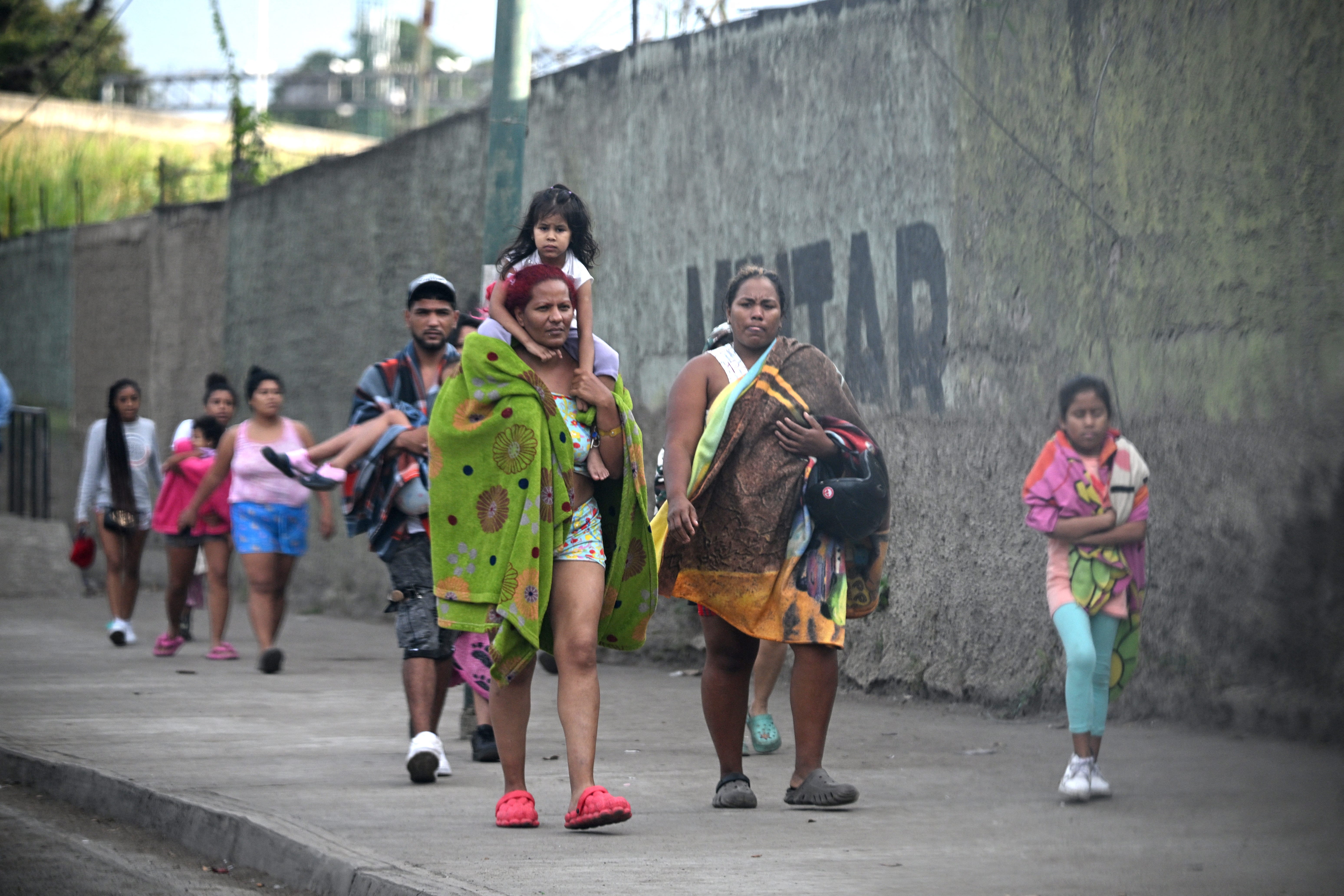
Picture of fire at Fuerte Tiuna, Venezuela's largest military complex, after a series of explosions in Caracas on January 3, 2026. Loud explosions, accompanied by sounds resembling aircraft flyovers, were heard in Caracas around 2:00 am on January 3. Smoke rises from explosions in Caracas, Venezuela, January 3, 2026, in this screen grab obtained from video obtained by Reuters. Fire at Fuerte Tiuna, Venezuela's largest military complex, is seen from a distance after a series of explosions in Caracas on January 3, 2026. Helicopters fly past plumes of smoke rising from explosions, in Caracas, Venezuela, January 3, 2026 in this screen grab obtained from video obtained by Reuters. A column of smoke rises during multiple explosions in the early hours of the morning, in Caracas, Venezuela, January 3, 2026 in this screen grab obtained from video obtained by Reuters. A military personnel member walks past debris at La Carlota military air base, after U.S. President Donald Trump said the U.S. has struck Venezuela and captured its President Nicolas Maduro, in Caracas, Venezuela, Jan. 3, 2026. A destroyed anti-aircraft unit at La Carlota military air base, after U.S. President Donald Trump said the U.S. has struck Venezuela and captured its President Nicolas Maduro, in Caracas, Venezuela, Jan. 3, 2026. Civilians who were living inside Fuerte Tiuna, Venezuela's largest military complex leave the compound, in Caracas on Jan. 3, 2026. A firefighter walks past a destroyed anti-aircraft unit at La Carlota military air base, after U.S. President Donald Trump said the U.S. has struck Venezuela and captured its President Nicolas Maduro, in Caracas, Venezuela, January 3, 2026. Destroyed vehicles at La Carlota military air base, after U.S. President Donald Trump said the U.S. has struck Venezuela and captured its President Nicolas Maduro, in Caracas, Venezuela, January 3, 2026. A member of the National Guard stands guard at Fuerte Tiuna, Venezuela's largest military complex, in Caracas on Jan. 3, 2026, after U.S. forces captured Venezuelan leader Nicolas Maduro after launching a A Colombian soldier stands guard at the border between Venezuela and Colombia, after U.S. President Donald Trump said the U.S. has struck Venezuela and captured its President Nicolas Maduro, in Cucuta, Colombia, January 3, 2026. Colombian police and military personnel stand guard at the border between Venezuela and Colombia, after U.S. President Donald Trump said the U.S. has struck Venezuela and captured its President Nicolas Maduro, in Cucuta, Colombia, January 3, 2026. A destroyed anti-aircraft unit at La Carlota military air base, after U.S. President Donald Trump said the U.S. has struck Venezuela and captured its President Nicolas Maduro, in Caracas, Venezuela, January 3, 2026. A man walks next to military vehicles as Colombian soldiers patrol the border between Venezuela and Colombia, after U.S. President Donald Trump said the U.S. has struck Venezuela and captured its President Nicolas Maduro, in Cucuta, Colombia, January 3, 2026. Passengers sleep on the floor, after flights were delayed and cancelled when the airspace was closed due to U.S. strikes on Venezuela overnight, at Rafael Hernandez International Airport in Aguadilla, Puerto Rico January 3, 2026. U.S. Air Force F-22 Raptor fighter jets sit parked on the tarmac at the former Roosevelt Roads naval base, after U.S. President Donald Trump said the U.S. has struck Venezuela and captured its President Nicolas Maduro and his wife Cilia Flores, in Ceiba, Puerto Rico, January 3, 2026. Colombian soldiers in a military vehicle at the border between Venezuela and Colombia, after U.S. President Donald Trump said the U.S. has struck Venezuela and captured its President Nicolas Maduro, in Cucuta, Colombia, January 3, 2026. A car drives on an empty street, after U.S. President Donald Trump said the U.S. has struck Venezuela and captured its President Nicolas Maduro, in Caracas, Venezuela January 3, 2026. A cyclist stops to check their phone, after U.S. President Donald Trump said the U.S. has struck Venezuela and captured its President Nicolas Maduro, in Caracas, Venezuela January 3, 2026. F-22, C-130 and F-35 aircraft are seen at the former Roosevelt Roads naval base, after U.S. President Donald Trump said on Saturday the U.S. has struck Venezuela and captured its President Nicolas Maduro, in Ceiba, Puerto Rico, January 3, 2026. A supporter of Venezuelan President Nicolas Maduro holds a flag of Venezuela on an empty street near Miraflores Palace, after U.S. President Donald Trump said the U.S. has struck Venezuela and captured President Maduro, in Caracas, Venezuela, January 3, 2026. A person wears a Venezuelan flag, as they and others react to the news after U.S. President Donald Trump said the U.S. has struck Venezuela and captured its President Nicolas Maduro, in Miami, Florida, U.S., January 3, 2026. People react to the news after U.S. President Donald Trump said the U.S. has struck Venezuela and captured its President Nicolas Maduro, on the streets of Miami, Florida, U.S., January 3, 2026. A person wearing a hat that reads A man holds a flag reading

US bombs targets in Venezuela and captures Nicolás Maduro, Trump says

"Everyone is super thrilled," she said of the news that U.S. troops captured President Nicolás Maduro.

"He's the worst of the worst," she said, "running a criminal organization and giving away the country's land to the worst enemies of the United States. People need to realize that."

Venezuela's President Nicolás Maduro gestures to supporters after he was sworn in for a third six-year term, in Caracas, Venezuela, on Jan. 10, 2025.  The United States seized Venezuelan leader Nicolás Maduro and his wife in an overnight military operation on Jan. 3, 2026, President Donald Trump said, as explosions rocked Caracas and targets across the country.

Thanks to social media platform WhatsApp, she says Venezuelans were aware military action was imminent and residents near its targets knew to stay put.

"My family lives very near military bases and they knew they needed to hide, though no one knew exactly when it would start until they began hearing explosions," she said.

"At first, they thought it might be fireworks, but then they started hearing the helicopters and stuff."

In a text to the Naples Daily News, U.S. Congressman Byron Donalds praised PresidentDonald Trumpfor the action and accused Maduro of using "foreign terrorist organizations to traffic deadly drugs and violence into our country, killing countless Americans. He was one of the largest narco-traffickers in the world and a threat to our national security," he wrote inan early morning X post.

Byron Donalds speaks at his kickoff party for the governor's race at the Sugarshack in Bonita Springs on Friday, March 28, 2025.

"This morning, he was captured. This is 'Peace Through Strength.' Justice will be served."

Estimates of theVenezuelan population in Southwest Florida aren't precise, but the U.S. Census Bureau's most recent American Community Surveyshowed that there were approximately4,200 in Collier as of 2023, and 2,200 in Lee.

Castillo agrees with Trump's assertions that many of the recent immigrants are "people who hate the U.S.," she said.

As Cuba's Fidel Castro did in 1980, she says, Maduro released prisoners and mentally ill people, encouraging them to come to the U.S. "So you get the worst coming here."

Venezuelan immigrants were one of the groups theTrump administration targetedlast year as it rolled back temporary protected status for citizens from several countries, including Haiti, Venezuela, Honduras, Afghanistan and Yemen.

Amy Bennett Williams is a senior reporter focused on the environment. Reach her by emailing awilliams@news-press.com

Please support local community journalism and stay informed about Southwest Florida news by subscribing toThe News-PressandNaples Daily News; download the freeNews-PressorNaples Daily News app, and sign up for daily briefing email newsletter, food & dining and growth & development newslettershereandhere.

This article originally appeared on Naples Daily News:What are they saying about strikes on Venezuela, capture of Maduro?

'Super thrilled' Floridians react to Venezuela strikes

As Floridians awoke to news ofU.S. strikes on Venezuela,Denisse Castillo was already celebrating. The Venezuelan...
Notre Dame coach Micah Shrewsberry apologizes for actions after controversial call late in Cal loss

SOUTH BEND, Ind. (AP) — Notre Dame coach Micah Shrewsberry apologized Saturday, one day after charging at an official following his team's controversial loss to Cal. He also received a public reprimand from the Atlantic Coast Conference for his actions.

Shrewsberry was angry over how whatbecame a four-point playwas officiated in the final seconds of the Fighting Irish's 72-71 loss. The Irish, up by three, fouled Cal's Dai Dai Ames — trying to keep him from attempting a game-tying 3-pointer.

Ames got the shot off anyway, then made the free throw that put the Bears ahead to stay. As time expired, Shrewsberry briefly charged off the court in the direction of referee Adam Flore, who had already left the floor.

"I want to apologize for what took place immediately after the Cal game last night," Shrewsberry said in a statement released by Notre Dame. "My actions were inappropriate and not symbolic of the leader I strive to be and what Notre Dame expects of its coaches and educators. I will learn from this lack of judgement and be better in the future."

Shrewsberry also apologized to his team, Notre Dame and its leadership, to the ACC and to Cal coach Mark Madsen and the Bears, "as my actions were unacceptable," he said.

The ACC, in issuing the reprimand, said it considers the matter now closed. Shrewsberry is expected to meet with reporters in a regularly scheduled ACC teleconference on Monday and Notre Dame does not play again until a home game on Jan. 10 against Clemson.

Shrewsberry "aggressively confronted" the referee, the conference said, adding that the "unsportsmanlike behavior that was displayed is unacceptable and tarnishes the on-court play between these institutions."

It was a wild sequence. Officials originally called Ames' shot good, then said the foul was before the shot, then changed their minds once again and deemed the 3-pointer good for a second time. Notre Dame's Logan Imes was called for the foul, and replays showed he tried to foul Ames at least twice previously on the play — with neither drawing a whistle. Fouling, when leading by three points late in games, is a common strategy for some teams in an effort to prevent 3-point tries.

After Notre Dame missed a shot as time expired, Shrewsberry charged toward the corner of the floor — in Flore's direction — and needed to be held back by several assistant coaches and players. Shrewsberry composed himself after a few moments and participated in the postgame handshakes with Cal players and coaches.

"Tremendous respect for Coach Shrewsberry and the entire Notre Dame program. It's emotional for all of us," Madsen said. "In the handshake line, it was nothing but class, class act. ... We've had some battles for them. A lot of respect for Notre Dame."

Get poll alerts and updates on the AP Top 25 throughout the season. Sign uphere. AP college basketball:https://apnews.com/hub/ap-top-25-college-basketball-pollandhttps://apnews.com/hub/college-basketball

Notre Dame coach Micah Shrewsberry apologizes for actions after controversial call late in Cal loss

SOUTH BEND, Ind. (AP) — Notre Dame coach Micah Shrewsberry apologized Saturday, one day after charging at an official fol...


FORTE JRNL © 2015 | Distributed By My Blogger Themes | Designed By Templateism.com