'A lot of gunfire': Here's how the US raid to capture Maduro unfolded

Underneath a full moon in Caracas, the might of the U.S. military was on full display during the early morning hours of Jan. 3.

Special operations helicopters thudded through the sky at low altitude, exchanging fire with Venezuelan air defenses on their way to and from the compound whereArmy Delta Force operators capturedthe country's leaderNicolás Maduroand his wifeCilia Flores.

Fighter and bomber jets supported the raid force, striking air defenses and other targets in Caracas and three coastal states.

And the moonlight was all that much of Venezuela's capital had to go by, since U.S. cyber warfare operators and intelligence agencies disrupted the city's power supply.

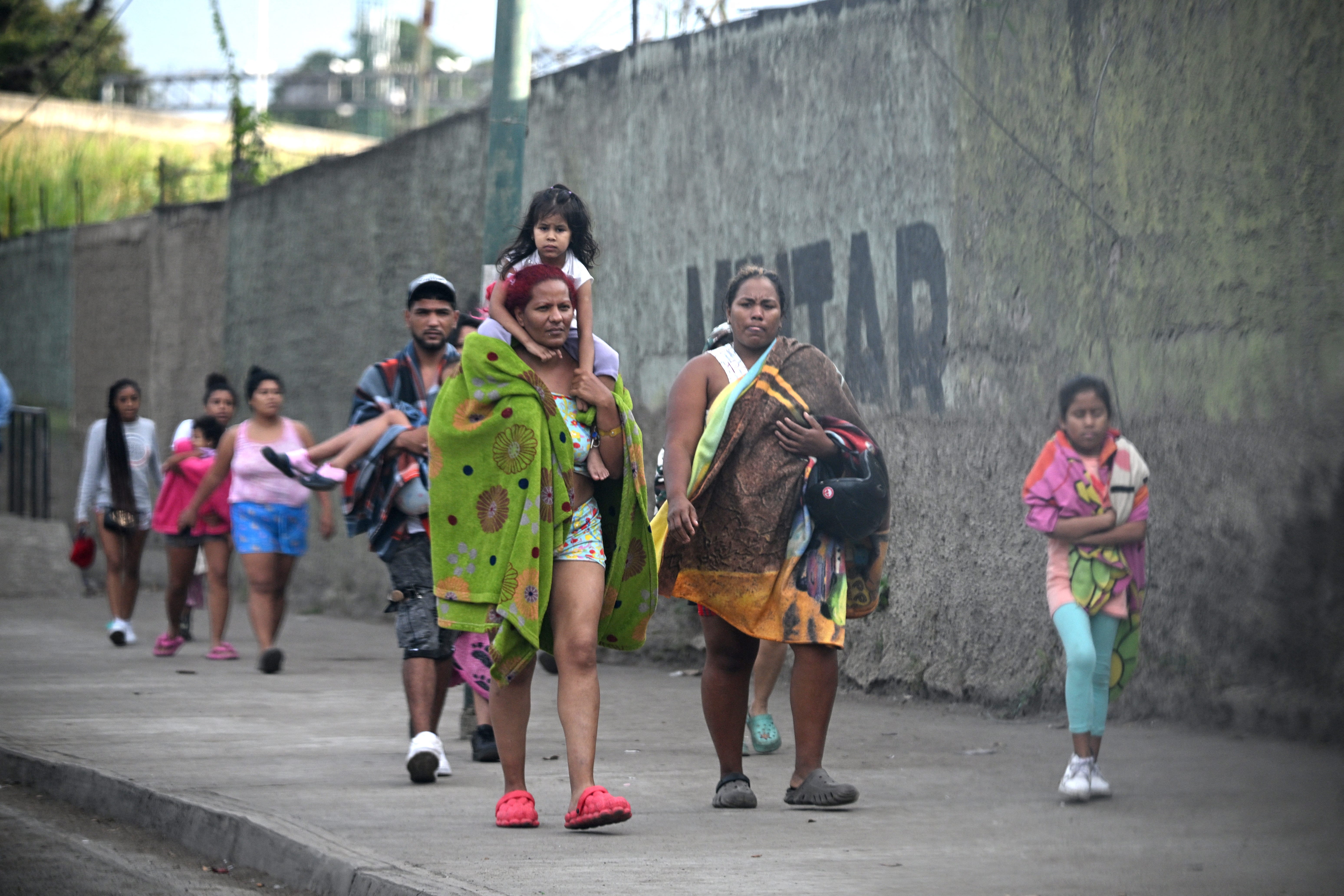
Picture of fire at Fuerte Tiuna, Venezuela's largest military complex, after a series of explosions in Caracas on January 3, 2026. Loud explosions, accompanied by sounds resembling aircraft flyovers, were heard in Caracas around 2:00 am on January 3. Smoke rises from explosions in Caracas, Venezuela, January 3, 2026, in this screen grab obtained from video obtained by Reuters. Fire at Fuerte Tiuna, Venezuela's largest military complex, is seen from a distance after a series of explosions in Caracas on January 3, 2026. Helicopters fly past plumes of smoke rising from explosions, in Caracas, Venezuela, January 3, 2026 in this screen grab obtained from video obtained by Reuters. A column of smoke rises during multiple explosions in the early hours of the morning, in Caracas, Venezuela, January 3, 2026 in this screen grab obtained from video obtained by Reuters. A military personnel member walks past debris at La Carlota military air base, after U.S. President Donald Trump said the U.S. has struck Venezuela and captured its President Nicolas Maduro, in Caracas, Venezuela, Jan. 3, 2026. A destroyed anti-aircraft unit at La Carlota military air base, after U.S. President Donald Trump said the U.S. has struck Venezuela and captured its President Nicolas Maduro, in Caracas, Venezuela, Jan. 3, 2026. Civilians who were living inside Fuerte Tiuna, Venezuela's largest military complex leave the compound, in Caracas on Jan. 3, 2026. A firefighter walks past a destroyed anti-aircraft unit at La Carlota military air base, after U.S. President Donald Trump said the U.S. has struck Venezuela and captured its President Nicolas Maduro, in Caracas, Venezuela, January 3, 2026. Destroyed vehicles at La Carlota military air base, after U.S. President Donald Trump said the U.S. has struck Venezuela and captured its President Nicolas Maduro, in Caracas, Venezuela, January 3, 2026. A member of the National Guard stands guard at Fuerte Tiuna, Venezuela's largest military complex, in Caracas on Jan. 3, 2026, after U.S. forces captured Venezuelan leader Nicolas Maduro after launching a A Colombian soldier stands guard at the border between Venezuela and Colombia, after U.S. President Donald Trump said the U.S. has struck Venezuela and captured its President Nicolas Maduro, in Cucuta, Colombia, January 3, 2026. Colombian police and military personnel stand guard at the border between Venezuela and Colombia, after U.S. President Donald Trump said the U.S. has struck Venezuela and captured its President Nicolas Maduro, in Cucuta, Colombia, January 3, 2026. A destroyed anti-aircraft unit at La Carlota military air base, after U.S. President Donald Trump said the U.S. has struck Venezuela and captured its President Nicolas Maduro, in Caracas, Venezuela, January 3, 2026. A man walks next to military vehicles as Colombian soldiers patrol the border between Venezuela and Colombia, after U.S. President Donald Trump said the U.S. has struck Venezuela and captured its President Nicolas Maduro, in Cucuta, Colombia, January 3, 2026. Passengers sleep on the floor, after flights were delayed and cancelled when the airspace was closed due to U.S. strikes on Venezuela overnight, at Rafael Hernandez International Airport in Aguadilla, Puerto Rico January 3, 2026. U.S. Air Force F-22 Raptor fighter jets sit parked on the tarmac at the former Roosevelt Roads naval base, after U.S. President Donald Trump said the U.S. has struck Venezuela and captured its President Nicolas Maduro and his wife Cilia Flores, in Ceiba, Puerto Rico, January 3, 2026. Colombian soldiers in a military vehicle at the border between Venezuela and Colombia, after U.S. President Donald Trump said the U.S. has struck Venezuela and captured its President Nicolas Maduro, in Cucuta, Colombia, January 3, 2026. A car drives on an empty street, after U.S. President Donald Trump said the U.S. has struck Venezuela and captured its President Nicolas Maduro, in Caracas, Venezuela January 3, 2026. A cyclist stops to check their phone, after U.S. President Donald Trump said the U.S. has struck Venezuela and captured its President Nicolas Maduro, in Caracas, Venezuela January 3, 2026. F-22, C-130 and F-35 aircraft are seen at the former Roosevelt Roads naval base, after U.S. President Donald Trump said on Saturday the U.S. has struck Venezuela and captured its President Nicolas Maduro, in Ceiba, Puerto Rico, January 3, 2026. A supporter of Venezuelan President Nicolas Maduro holds a flag of Venezuela on an empty street near Miraflores Palace, after U.S. President Donald Trump said the U.S. has struck Venezuela and captured President Maduro, in Caracas, Venezuela, January 3, 2026. A person wears a Venezuelan flag, as they and others react to the news after U.S. President Donald Trump said the U.S. has struck Venezuela and captured its President Nicolas Maduro, in Miami, Florida, U.S., January 3, 2026. People react to the news after U.S. President Donald Trump said the U.S. has struck Venezuela and captured its President Nicolas Maduro, on the streets of Miami, Florida, U.S., January 3, 2026. A person wearing a hat that reads A man holds a flag reading

US bombs targets in Venezuela and captures Nicolás Maduro, Trump says

Here's howthe raid to capture Maduro– Operation Absolute Resolve – went down, according to public comments from PresidentDonald Trump's administration and media reports.

The preparation for the raid took months, explained Air Force Gen. Dan "Razin" Caine, chairman of the Joint Chiefs of Staff.

A group ofCIA officersbegan working clandestinely in August to track Maduro. Other segments of the intelligence community also turned their lenses onto the Venezuelan leader: the electronic intercept capabilities of the National Security Agency, the imagery analysts of the National Geospatial-Intelligence Agency and others.

The Pentagongradually built up U.S. troopsin the region, first by deploying missile-carrying ships and a floating Marine Corps task force, then fighter jets, then an aircraft carrier, then more fighter jets, and so forth, until a massive armada was in place.

U.S. F-35 Lightning II aircraft taxi at the former Roosevelt Roads naval base, after President Donald Trump said on Saturday the U.S. has struck Venezuela and captured its President  Nicolás Maduro, in Ceiba, Puerto Rico, Jan. 3, 2026

The Army special operators tasked with the mission built a replica of Maduro's compound – just as was done for the 2011 raid that killed Osama Bin Laden in Abbotabad, Pakistan – and practiced meticulously.

"We rehearse again and again – not to get it right, but to ensure that we can't get it wrong," said Caine.

The pieces were in place in "early December," Caine said. But choosing the right day for the mission proved tricky.

Secretary of Defense Pete Hegseth and General Dan Caine, Chairman of the Joint Chiefs of Staff, shake hands during a press conference following a U.S. strike on Venezuela where President Nicolas Maduro and his wife, Cilia Flores, were captured, from Trump's Mar-a-Lago club in Palm Beach, Florida, January 3, 2026.

Caine said the military wanted good weather for the risky helicopter flights. Maduro also needed to be in a location where U.S. troops could snatch him with minimal risk, including to civilians.

Conditions proved favorable on the night of Jan. 2. Trump gave the "go" order at 10:46 p.m. Eastern.

The raid force, which included law enforcement personnel, entered Venezuela on at least seven helicopters, flying roughly 100 feet above the Caribbean Sea.

The pilots of the Army's elite 160th Special Operations Aviation Regiment – whose "Nightstalkers Don't Quit" motto Caine partially uttered in a thinly veiled shoutout during the press conference – navigated mountains, low cloud ceilings and enemy fire on their way to Maduro's compound.

The Venezuelan military was "in a very ready position," Trump said. But the timing of the American mission was a surprise, and Maduro's forces "were completely overwhelmed and very quickly incapacitated."

An eyewitness captured video of the helicopters streaming across the Caracas sky as explosions lit up the mountains in the distance. More than 150 aircraft, including fighter and bomber jets from the Marine Corps, Navy, active duty Air Force and Air National Guard, participated in the operation.

Helicopters fly past plumes of smoke rising from explosions, in Caracas, Venezuela, Jan. 3, 2026 in this screen grab obtained from video obtained by Reuters.

Another member of the public caught a U.S. helicopter unleashing rockets at an unknown ground target.

The strike force touched down at Maduro's compound at 1:01 a.m. Eastern.

The raid unfolded quickly in the dark.

The compound "was more like a fortress than a house," Trump said.

Maduro and Flores made a run for a reinforced steel safe room. They likely hoped that, once they were holed up there, crisis response troops would come to their rescue.

But the U.S. operators knew about the room and were prepared to breach it with blow torches and other tools – Trump claimed that the special operators could breach the door in an average time of 47 seconds during their practice runs for the raid.

The U.S. raiders were fiercely opposed, with "a lot of gunfire," the president said.

A handful of U.S. troops suffered gunshot and shrapnel wounds, though officials said none of the injuries were life-threatening. One helicopter was hit by Venezuelan fire but "remained flyable," Caine said.

<p style=President Donald Trump, alongside (L/R), CIA Director John Ratcliffe, Secretary of State Marco Rubio and Secretary of Defense Pete Hegseth, speaks to the press following US military actions in Venezuela, at his Mar-a-Lago residence in Palm Beach, Florida, on January 3, 2025.

The U.S. "successfully carried out a large scale strike against Venezuela and its leader, President Nicolás Maduro, who has been, along with his wife, captured and flown out of the Country," Trump said in a post on Truth Social.

" style="max-width:100%; height:auto; border-radius:6px; margin:10px 0;" loading="lazy" /> Venezuelan citizens living in Spain use their smartphones to follow US' President Donald Trump's press conference as they gather at Puerta del Sol square in Madrid on January 3, 2026, after US forces captured Venezuelan leader Nicolas Maduro after launching a (L/R) US Secretary of State Marco Rubio looks on as US President Donald Trump speaks to the press following US military actions in Venezuela, at his Mar-a-Lago residence in Palm Beach, Florida, on January 3, 2025. President Trump said Saturday that US forces had captured Venezuelan leader Nicolas Maduro after launching a US President Donald Trump and US Secretary of Defense Pete Hegseth arrive to speak to the press following US military actions in Venezuela, at his Mar-a-Lago residence in Palm Beach, Florida, on January 3, 2025. President Trump said Saturday that US forces had captured Venezuelan leader Nicolas Maduro after launching a (L/R) US Secretary of State Marco Rubio looks on as US President Donald Trump speaks to the press following US military actions in Venezuela, at his Mar-a-Lago residence in Palm Beach, Florida, on January 3, 2025. President Trump said Saturday that US forces had captured Venezuelan leader Nicolas Maduro after launching a

President Trump addresses the nation after military action in Venezuela

President Donald Trump, alongside (L/R), CIA Director John Ratcliffe, Secretary of State Marco Rubio and Secretary of Defense Pete Hegseth, speaks to the pressfollowing US military actions in Venezuela, at his Mar-a-Lago residence in Palm Beach, Florida, on January 3, 2025.

The U.S. "successfully carried outa large scale strike against Venezuelaand its leader, President Nicolás Maduro, who has been, along with his wife, captured and flown out of the Country," Trump said in a post on Truth Social.

The Venezuelan strongman didn't make it to his safe room in time. Maduro was unable to close the door.

"He got bum rushed," declared an ebullient Trump in a Saturday morning "Fox & Friends" interview.

After capturing Maduro and Flores, the raid force had to fight its way out of Venezuelan airspace, Caine said.

By 3:29 a.m. eastern, the helicopters were back over the Caribbean Sea.

Maduro and Flores were taken via helicopter to the USS Iwo Jima, a U.S. Navy amphibious assault ship that acts as a floating base for Marines.

After hours of initial silence from the Pentagon and White House, Trump announced Maduro's capture via aTruth Social postat 4:21 a.m. Eastern.

Venezuelan leader Nicolás Maduro, pictured here after his capture aboard the USS Iwo Jima, is seen in this handout image posted by U.S. President Donald Trump on Truth Social Jan. 3, 2026. The United States captured Venezuelan leader Nicolás Maduro and his wife in an overnight military operation on Jan. 3, 2026, President Donald Trump said, as explosions rocked Caracas and targets across the country.

He later shared a photo of the Venezuelan leader, blindfolded and clutching a water bottle aboard the ship, donning a gray Nike sweatsuit.

Maduro, long perceived as a savvy survivor of domestic political crises, is next slated to appear at his upcoming arraignment in a New York federal court.

This article originally appeared on USA TODAY:Here's how the US attacked Venezuela, captured Nicolás Maduro

'A lot of gunfire': Here's how the US raid to capture Maduro unfolded

Underneath a full moon in Caracas, the might of the U.S. military was on full display during the early morning hours of J...
Flights canceled in Caribbean after US strikes Venezuela

Hundreds offlights in Puerto Ricoand in the Caribbean have been canceled on Jan. 3 after the United Statesconducted large-scale strikes in Venezuelaand captured the country's leader,Nicolás Maduro.

The airspace in Puerto Rico has been restricted and flights from Luis Muñoz Marín International Airport in the island's capital, San Juan, have been canceled, the airportsaid in a statement. Flights will be suspended until 1 a.m. local time on Sunday, Jan. 4. At least 150 flights heading out of that airport, which is the Caribbean's busiest hub, have been canceled,according to FlightAware. An additional 140 flights headed to San Juan were canceled.

Other airports in Puerto Rico, including those in Ceiba, Aguadilla, Ponce, Isla Grande, Vieques and Culebra, have canceled flights, according toPuerto Rico Ports Authority Executive Director Norberto Negrón Díaz.

Puerto Rico Gov. Jenniffer González described the closure as a national security measure during a radio interview, as reported by local news outletEl Nuevo Día. She added that local agencies were coordinating with federal partners to manage airport and cargo operations.

Several airlines have said they have canceled flights to other locations in the Caribbean.

<p style=Reactions to the United States' bombing of Venezuela and capture of the country's president Nicolás Maduro ranged across the world. Some celebrated the operation while others rebuked Trump's intervention in the South American country. See the reactions in photos, beginning here with Venezuelans living in Chile celebrating in Santiago on January 3, 2026.

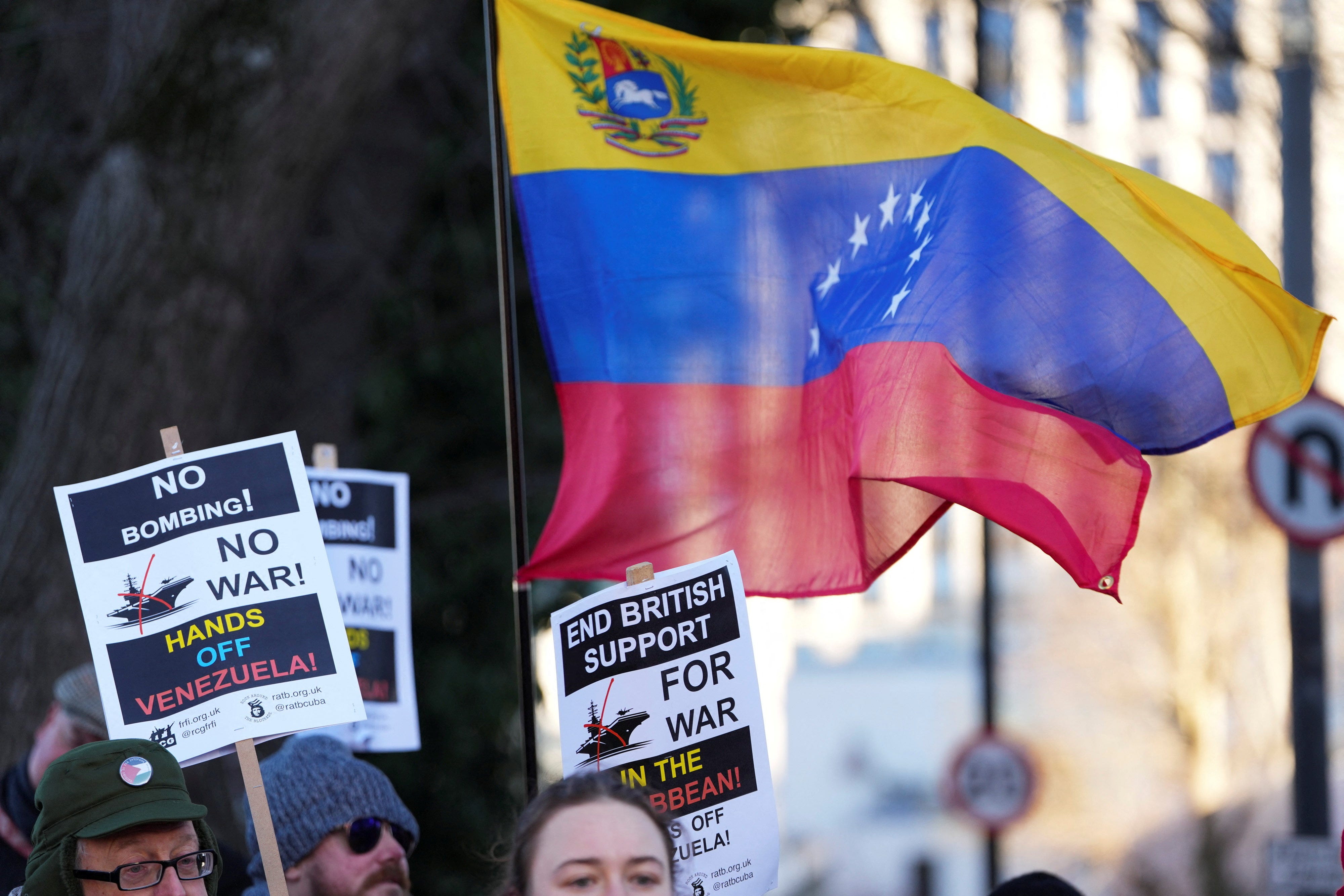
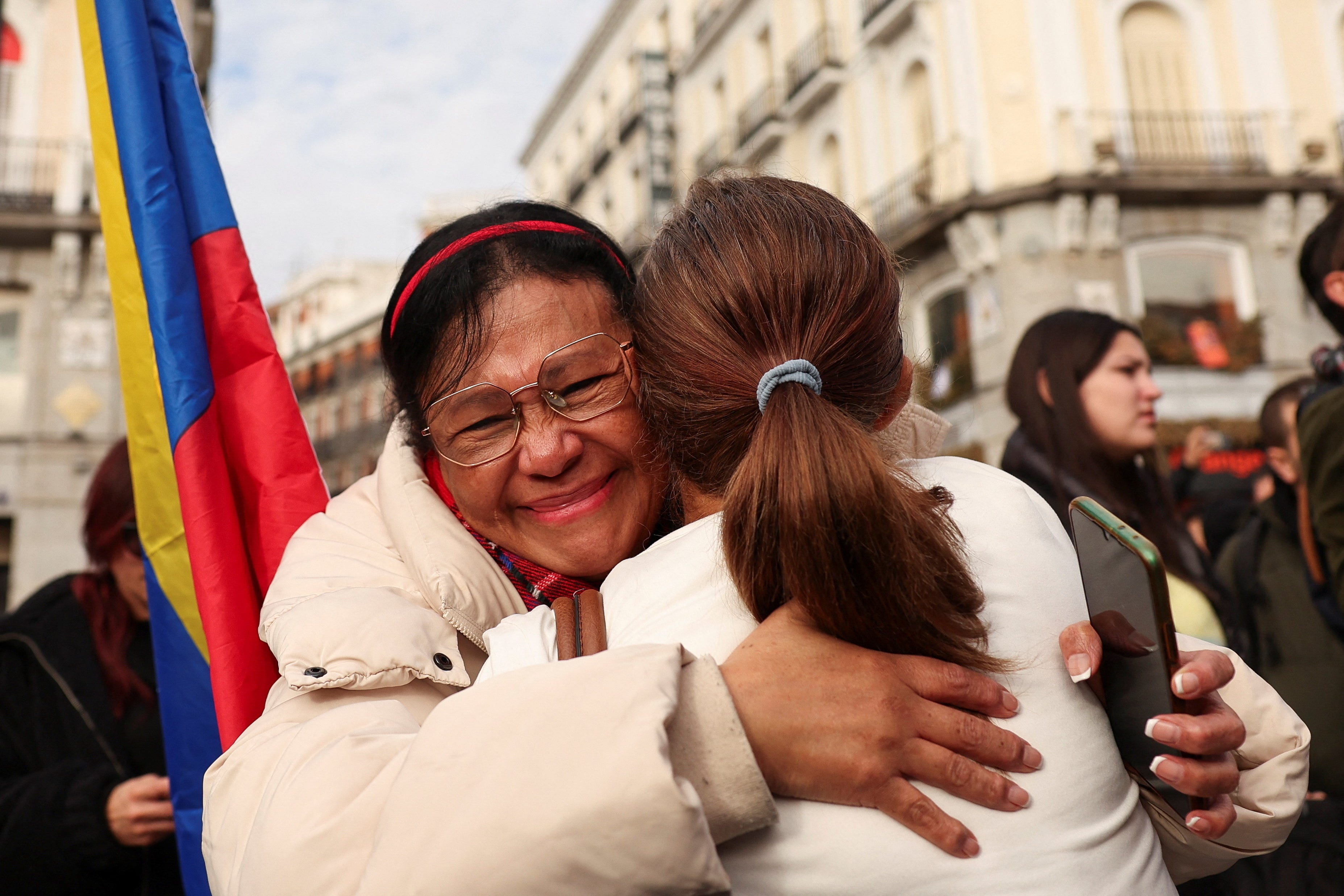
" style="max-width:100%; height:auto; border-radius:6px; margin:10px 0;" loading="lazy" /> A child holds a placard saying A woman reacts to the news after U.S. President Donald Trump said the U.S. has struck Venezuela and captured its President Nicolas Maduro, in Madrid, Spain, January 3, 2026. Armed supporters of Venezuela's President Nicolas Maduro gather near the Miraflores presidential palace in Caracas on January 3, 2026, after US forces captured him. A Venezuelan man living in Chile celebrates with a national flag and his car reading Venezuelans living in Chile celebrate in Santiago on January 3, 2026, after US forces captured Venezuelan leader Nicolas Maduro after launching a A man holds up a portrait of late Venezuela's leader (1999-2013) Hugo Chavez in Caracas on January 3, 2026, after US forces captured Venezuelan leader Nicolas Maduro. Activists of Socialist Unity Centre of India (SUCI) burn an effigy of US President Donald Trump during a rally in Kolkata on January 3, 2026, to protest against the recent US attack on Venezuela. A supporter of Nicolas Maduro holds a portrait of the Venezuelan President during a gathering near the Palacio de Miraflores in Caracas on January 3, 2026, after US forces captured Venezuelan leader Nicolas Maduro after launching a Venezuelans living in Chile celebrate in Santiago on January 3, 2026, after US forces captured Venezuelan leader Nicolas Maduro after launching a Venezuelans living in Chile celebrate in Santiago on January 3, 2026, after US forces captured Venezuelan leader Nicolas Maduro after launching a Demonstrators hold up a banner with the lettering reading 'Stop Trump - Free Venezuela' during a rally organised by left-wing 'Anti-Imperialist Coordination' (Antiimperialistische Koordination - AIK) under the motto 'Hands off Venezuela' at Vienna's Votive Park on January 3, 2026. The EU called for Demonstrators march with a banner with the lettering reading 'Hands off Venezuela' during a rally organised by left-wing 'Anti-Imperialist Coordination' (Antiimperialistische Koordination - AIK) in Vienna on January 3, 2026. The EU called for Venezuelans living in Peru celebrate outside the Venezuelan Embassy in Lima on January 3, 2026, after US forces captured Venezuelan leader Nicolas Maduro. President Donald Trump said Saturday that US forces had captured Venezuela's leader Nicolas Maduro after bombing the capital Caracas and other cities in a dramatic climax to a months-long standoff between Trump and Venezuelan. Venezuelans living in Peru celebrate outside the Venezuelan Embassy in Lima on January 3, 2026, after US forces captured Venezuelan leader Nicolas Maduro. President Donald Trump said Saturday that US forces had captured Venezuela's leader Nicolas Maduro after bombing the capital Caracas and other cities in a dramatic climax to a months-long standoff between Trump and Venezuelan. Venezuelans living in Peru celebrate at the Miguel de Cervantes park, near the Venezuelan Embassy in Lima on January 3, 2026, after US forces captured Venezuelan leader Nicolas Maduro. Venezuelans living in Peru dance to celebrate at the Miguel de Cervantes park, near the Venezuelan Embassy in Lima on January 3, 2026, after US forces captured Venezuelan leader Nicolas Maduro. A Venezuelan woman living in Peru celebrates with a national flag at the Miguel de Cervantes park, near the Venezuelan Embassy in Lima on January 3, 2026, after US forces captured Venezuelan leader Nicolas Maduro. Activists of Socialist Unity Centre of India (SUCI) protest against the recent US attack on Venezuela, in Kolkata on January 3, 2026. Members of the Communist Party of Britain (CPB) group hold banners outside the U.S. Embassy in London calling for People embrace next to a Venezuelan flag, as they react to the news after U.S. President Donald Trump said the U.S. has struck Venezuela and captured its President Nicolas Maduro, in Madrid, Spain, January 3, 2026.

See reactions after US explosions in Venezuela, Maduro capture

Reactions to theUnited States' bombing of Venezuela and capture of the country's president Nicolás Maduroranged across the world. Some celebrated the operation while others rebuked Trump's intervention in the South American country. See the reactions in photos, beginning here with Venezuelans living in Chile celebrating in Santiago on January 3, 2026.

JetBlue

JetBlueon Saturday, Jan. 3, saidflights in more than one dozen cities in the Caribbean are impacted due to airspace restrictions. The airline said the cities impacted are:

  • Aguadilla, Puerto Rico (BQN)

  • Antigua (ANU)

  • Aruba (AUA)

  • Bonaire (BON)

  • Bridgetown, Barbados (BGI)

  • Curaçao (CUR)

  • Georgetown, Guyana (GEO)

  • Grenada (GND)

  • Ponce, Puerto Rico (PSE)

  • Port of Spain, Trinidad and Tobago (POS)

  • San Juan, Puerto Rico (SJU)

  • St. Croix, U.S. Virgin Islands (STX)

  • St. Lucia (UVF)

  • St. Maarten (SXM)

  • St. Thomas, U.S. Virgin Islands (STT)

The airlines said customers may rebook their flights for travel through Saturday, Jan. 10, 2026, online in themanage tripssection of jetblue.com prior to the departure time of their originally scheduled flight. In addition, customers who had flights cancelled may also opt for a refund.

American Airlines

American Airlinesnoted flights from 19 Caribbean citieshave been impacted due to airspace closure.

The cities who have had flights impacted include:

  • Anguilla Wallblake, Anguilla (AXA)

  • Antigua, Antigua (ANU)

  • Argyle, Saint Vincent and the Grenadines (SVD)

  • Aruba, Aruba (AUA)

  • Beef Island, British Virgin Islands (EIS)

  • Bonaire, Bonaire (BON)

  • Bridgetown, Barbados (BGI)

  • Curaçao, Curaçao (CUR)

  • Fort de France, Martinique (FDF)

  • Grenada, Grenada (GND)

  • Melville Hall, Dominica (DOM)

  • Pointe-a-Pitre, Guadeloupe (PTP)

  • Port of Spain, Trinidad and Tobago (POS)

  • San Juan, Puerto Rico (SJU)

  • St. Croix Island, U.S. Virgin Islands (STX)

  • St. Kitts, Saint Kitts and Nevis (SKB)

  • St. Lucia, Saint Lucia (UVF)

  • St. Maarten, Saint Maarten (SXM)

  • St. Thomas Island, U.S. Virgin Islands (STT)

"We're working around the clock to care for you on your travel journey," the airline said.

Fees to change flights are waived if you bought your ticket by Jan. 2, 2026, scheduled to travel between Jan. 3-4, or can travel between January 2-9, the airline said.

Delta Air Lines

Deltasaid in a statementthe airline began canceling flights in the Caribbean starting on early Saturday morning. The airline said it's closely monitoring the situation, but did not say which flights had been impacted.

Southwest Airlines

Southwest Airlineshave flights impacted in three Caribbean cities:

  • Aruba, Aruba (AUA)

  • Punta Cana, Dominican Republic (PUJ)

  • San Juan, Puerto Rico (SJU)

Customers can rebook or travel standby within 14 days without paying a fare difference. Refunds may be available for canceled or significantly delayed flights.

Frontier Airlines

Frontier Airlines flightsfrom five Caribbean cities have been impacted:

  • San Juan (SJU)

  • Ponce (PSE)

  • Aguadilla (BQN)

  • Saint Martin (SXM)

  • Aruba (AUA)

Change and cancellation fees are waived for flights from these cities. Fare differences may still apply, and canceled trips convert to travel credit.

Spirit Airlines

Spirit Airlines saidflights from five Caribbean cities have been impacted. The cities include:

  • San Juan (SJU)

  • Aruba (AUA)

  • St. Croix (STX)

  • St. Thomas (STT)

  • St. Maarten (SXM)

Rebooking will be allowed through Jan. 11.

This story has been updated to add new information.

This article originally appeared on USA TODAY:JetBlue, American Airlines cancel flights in Caribbean

Flights canceled in Caribbean after US strikes Venezuela

Hundreds offlights in Puerto Ricoand in the Caribbean have been canceled on Jan. 3 after the United Statesconducted large...
Venezuelans wonder who's in charge as Trump claims contact with Maduro's deputy

BUENOS AIRES, Argentina (AP) — Venezuelans on Saturday were scrambling to understand who is in charge of their country after a U.S. military operation thatcaptured President Nicolás Maduro.

President Donald Trump delivered a shocking pick: The United States, perhaps in coordination with one of Maduro's most trusted aides.

Delcy Rodríguez has served as Maduro's vice president since 2018, overseeing much of Venezuela's oil-dependent economy as well as itsfeared intelligence service. But she is someone the Trump administrationapparently is willing to work with, at least for now.

"She's essentially willing to do what we think is necessary to make Venezuela great again," Trump told reporters of Rodríguez, who faced U.S. sanctions during Trump's first administration for her role in undermining Venezuelan democracy.

In a major snub, Trump said opposition leader Maria Corina Machado, who wasawarded last year's Nobel Peace Prize, didn't have the support to run the country.

Trump said Rodríguez had a long conversation with Secretary of State Marco Rubio in which Trump claimed she said, "'We'll do whatever you need.'"

"I think she was quite gracious," Trump added. "We can't take a chance that somebody else takes over Venezuela that doesn't have the good of the Venezuelan people in mind."

Rodríguez tried to project strength and unity among the ruling party's many factions, downplaying any hint of betrayal. In remarks on state TV, she demanded the immediate release of Maduro and his wife, Cilia Flores, and denounced the U.S. operation as a flagrant violation of the United Nations charter.

"There is only one president in this country, and his name is Nicolás Maduro," Rodríguez said, surrounded by top civilian officials and military commanders.

There was no immediate sign that the U.S. was running Venezuela.

"What will happen tomorrow? What will happen in the next hour? Nobody knows," Caracas resident Juan Pablo Petrone said.

No sign of a swearing-in

Trump indicated that Rodríguez had been sworn in already as president of Venezuela, per the transfer of power outlined in the constitution. However, state television has not broadcast any swearing-in ceremony.

In her televised address, Rodríguez did not declare herself acting president or mention a political transition. A ticker at the bottom of the screen identified her as the vice president. She gave no sign that she would be cooperating with the U.S.

"What is being done to Venezuela is an atrocity that violates international law," she said. "History and justice will make the extremists who promoted this armed aggression pay."

The Venezuelan constitution also says a new election must be called within a month in the event of the president's absence.

But experts have been debating whether the succession scenario would apply here, given the government'slack of popular legitimacyand theextraordinary U.S. military intervention.

Venezuelan military officials were quick to project defiance in video messages.

"They have attacked us but will not break us," said Defense Minister Gen. Vladimir Padrino López, dressed in fatigues.

Interior Minister Diosdado Cabello appeared on state TV in a helmet and flak jacket, urging Venezuelans to "trust in the political leadership and military" and "get out on the streets" to defend the country's sovereignty.

"These rats attacked and they will regret what they did," he said of the U.S.

Strong ties with Wall Street

A lawyer educated in Britain and France, Rodríguez has a long history of representing the revolution started by thelate Hugo Chávezon the world stage.

She and her brother, Jorge Rodríguez, head of theMaduro-controlled National Assembly, have strong leftist credentials born from tragedy. Their father was a socialist leader who died in police custody in the 1970s, a crime that shook many activists of the era, including a young Maduro.

Unlike many in Maduro's inner circle, the Rodríguez siblings have avoided criminal indictment in the U.S. Delcy Rodríguez has developed strong ties with Republicans in the oil industry and on Wall Street who balked at the notion of U.S.-led regime change.

Among her past interlocutors was Blackwater founder Erik Prince and, more recently, Richard Grenell, a Trump special envoy who tried to negotiate a deal with Maduro for greater U.S. influence in Venezuela.

Fluent in English, Rodríguez is sometimes portrayed as a well-educated moderate in contrast to the military hardliners who took up arms with Chávez against Venezuela's democratically elected president in the 1990s.

Many of them, especially Cabello, are wanted in the U.S. on drug trafficking charges and stand accused of serious human rights abuses. But they continue to hold sway over the armed forces, the traditional arbiter of political disputes in Venezuela.

That presents major challenges to Rodríguez asserting authority. But experts say that Venezuela's power brokers have long had a habit of closing ranks behind their leaders.

"These leaders have all seen the value of staying united. Cabello has always taken a second seat or third seat, knowing that his fate is tied up with Maduro's, and now he very well might do that again," said David Smilde, a sociology professor at Tulane University who has conducted research into Venezuela's political dynamics over the past three decades.

"A lot depends on what happened last night, which officials were taken out, what the state of the military looks like now," Smilde said. "If it doesn't have much firepower anymore, they're more vulnerable and diminished and it will be easier for her to gain control."

An apparent snub of the opposition

Shortly before Trump's press conference, Machado, the opposition leader, called on her allyEdmundo González— a retired diplomat widely considered to have won thecountry's disputed 2024 presidential election— to "immediately assume his constitutional mandate and be recognized as commander-in-chief."

In an triumphant statement, Machado promised that her movement would "restore order, freepolitical prisoners, build an exceptional country and bring our children back home."

She added: "Today we are prepared to assert our mandate and take power."

Asked about Machado, Trump was blunt: "I think it would be very tough for (Machado) to be the leader," he said.

"She doesn't have the support or respect within the country."

Venezuelans expressed shock, with many speculating on social media that Trump had mixed up the two women's names. Machado has not responded to Trump's remarks.

Goodman reported from Miami.

Venezuelans wonder who's in charge as Trump claims contact with Maduro's deputy

BUENOS AIRES, Argentina (AP) — Venezuelans on Saturday were scrambling to understand who is in charge of their country af...
Tears, relief and questions about what comes next: Venezuelans in U.S. celebrate Maduro capture

DORAL, Fla. — They came out in the middle of the night when they heard the news, some still in pajamas as they joined the crowd of revelers waving Venezuelan flags and dancing, singing and crying.

"Thank you, Lord, thank you president of the United States. I've been waiting for years — he's done so much damage. This has been horrible," said Yajaira, a Venezuelan American from the city of Maracaibo.

The newsthat the U.S. had attacked Venezuelaand captured President Nicolás Maduro and his wife elicited a spontaneous celebration in front of El Arepazo, a restaurant in Doral, a city in Miami-Dade County nicknamed "Doralzuela" because it hasthe highest concentration of Venezuelansin the U.S.

"We've been here eight years, eight years already," Yajaira said, referring to how long she's been in the U.S. "They killed my older brother. It was so tough. They kidnapped my brothers. That was tough. I thank God for all of this because it's been tough," she said, her voice breaking as she looked up at the sky.

Throughout the morning, the growing crowds in Doral were chanting in Spanish, "The government is over, the government has fallen," amid the blasting car horns and music.

Venezuelans started coming to Florida and the U.S. in large numbers in the early 2000s after socialist Hugo Chávez rose to power. The situation deteriorated drastically when Maduro took over in 2013. Under Maduro, the country's oil-driven economyhas faced a decadelong collapseand an estimated 80% of residents live in poverty. Around 8 million Venezuelans have fled under his rule.

President Donald Trump said the U.S. is "going to run" Venezuela following Maduro's capture "until such time as a safe, proper and judicious transition can take place." He said Venezuelan Vice President Delcy Rodriguez has been sworn is as president;she has called for Maduro's release.

People celebrate on the streets.  (Giorgio Viera / AFP - Getty Images)

Diana Monert, also celebrating in Doral, was asked what the recent events mean for Venezuelans. "Freedom," she said.

The relief and jubilation stretched across other parts of the country. In Cincinnati, Rosaly Navas, 43, a property manager, said, "My heart is racing — this is the biggest miracle that has happened in my lifetime. ... I have spent so many hours awake and I really want to contribute to recovering my country."

Questions over what happens next

Amid the relief among some Venezuelan Americans that Maduro was no longer in power, there were questions and concerns about what happens next, with several noting that other top officials in Venezuela had not been captured.

A young man celebrating in front of El Arepazo who did not want to give his name because he was worried about his family in Venezuela said it was "the biggest day we were waiting for. ... I'm really happy. We were waiting for the end of that dictatorship."

When asked how his family in Venezuela was doing, he said, "They're excited but at the same time they have fear, they're waiting for what's going to happen — what's going to be the next step."

Patricia Andrade, who helps newly arrived migrants through her Miami nonprofit Raices Venezolanas, said she has mixed feelings.

"I spent years waiting for the Chavez-Maduro regime to fall," she said.

While it has given her great happiness to see Maduro in U.S. custody, there are still many more Venezuelan officials to be arrested, she said.

Adelys Ferro, executive director of the Venezuelan American Caucus, a grassroots group working to amplify Venezuelan American voices and issues in the U.S., said she was celebrating that "justice is taking its course and that Maduro responds for all the crimes he's committed."

But she warned that "Venezuela is still not free from Chavismo," referring to the government's socialist rule started by Chávez. "I hope that the innocents, the good people in Venezuela, who are the majority, will be protected," she said.

People celebrate on the street. (Giorgio Viera / AFP - Getty Images)

Ferro added that she hopes "Trump understands Venezuelans here in the U.S. also fled and need protection. It's no time for more attacks and persecution of Venezuelan immigrants. Those people fled a dictatorship and they're not Tren de Aragua."

Ferro noted more than 6 in 10 Venezuelans in the U.S. came through temporary protected status, which the Trump administration has rescinded. She also urged Trump to recognize that there's a need for bipartisan support for Venezuelans. "What we need is support in this critical moment," she said.

'Something was coming'

In Venezuela, a resident who didn't want to be named for their own safety said, "We had different tips that something was coming, Trump had already announced something," adding the events reminded them of the late writer Gabriel García Márquez's novel "Chronicle of a Death Foretold."

Speaking hours after the attack, the Venezuelan resident said "nobody is in support of the invasion, the violence, but we aren't also in support of the people who didn't win the election," referring to Maduro, who remained in powerdespite credible evidence that his opponent won the 2024 election.

"We are humble citizens — we're caught. How is it possible that they took they took the president and his wife? Was it someone who betrayed him? There is so much uncertainty and so much fear," the resident said. "I'm very impressed that they just took him."

Yanire Lucas, a Caracas resident,told The Associated Pressshe was scared to even leave the house. "What is happening is unprecedented," Lucas said. "We're still on edge, and now we're uncertain about what to do. Stay safe at home, go out to look for food? I don't know."

Trump's statement that the U.S. would "run" Venezuela is opening up a host of questions over what will happen in the next few days and months.

But in Doral, before the president's statements, Yajaira was asked what message she had for other Venezuelans following the U.S. attack and Maduro's capture.

"Be strong, sí se puede [yes we can]" Yajaira said. "We're going to be a free, prosperous country."

Tears, relief and questions about what comes next: Venezuelans in U.S. celebrate Maduro capture

DORAL, Fla. — They came out in the middle of the night when they heard the news, some still in pajamas as they joined the...
How the US captured Venezuelan leader Nicolás Maduro

WASHINGTON (AP) — For months, the U.S. military had been amassing a presence off Venezuela's coast and conspicuously blowing up alleged drug trafficking boats and killing the occupants.

At the same time, U.S. intelligence agencies were carefully studying the country's authoritarian PresidentNicolás Maduro, learning minute details such as his eating habits while special forces secretly rehearsed a plan to forcibly remove him.

Months of covert planning led to the brazen operation overnight, when PresidentDonald Trumpgave an order authorizing Maduro's capture. The U.S. plunged the South American country's capital into darkness, infiltrated Maduro's home and whisked him to the United States, where the Trump administration planned toput him on trial.

Trump, during a news conference Saturday at his Florida home, laid out the details of the strike, after which he said Maduro and his wife, Cilia Flores, were flown by helicopter to a U.S. warship.

The operation termed "Absolute Resolve" unfolded under the cover of darkness, with U.S. forces holding fast in the region, awaiting the ideal weather conditions to give pilots clear routes into Caracas. The extensive planning included practice on a replica of the presidential compound, as well as U.S. service members armed with what Trump said were "massive blowtorches" in the event the steel walls of a safe room needed to be cut open to extract the pair.

"He didn't get that space closed. He was trying to get into it, but he got bum-rushed right so fast that he didn't get into that," Trump said an interview earlier Saturday morning on "Fox & Friends Weekend."

A carefully rehearsed mission

Gen. Dan Caine, chairman of the Joint Chiefs of Staff, said at Trump's news conference that U.S. forces had rehearsed their maneuvers for months, learning everything about Maduro — where he was at certain hours as well as details of his pets and the clothes he wore.

"We think, we develop, we train, we rehearse, we debrief, we rehearse again, and again," Caine said, saying his forces were "set" by early December. "Not to get it right, but to ensure we cannot get it wrong."

Trump said on Fox that U.S. forces had practiced their extraction on a replica building.

"They actually built a house which was identical to the one they went into with all the same, all that steel all over the place," Trump said.

Trump said in the television interview that U.S. forces held off on conducting the operation for days, waiting four days for cloud cover to pass. Caine said that on Friday night, "the weather broke just enough, clearing a path that only the most skilled aviators in the world could move through," adding that helicopters flew low to the water to enter Venezuela and were covered above by protective U.S. aircraft.

Trump said the U.S. operation "was dark and it was deadly," adding that "the lights of Caracas were largely turned off due to a certain expertise that we have," but giving no further details.

The attack, which Defense Secretary Pete Hegseth described as part of "massive joint military and law enforcement raid," lasted less than 30 minutes. At least seven explosions were heard in Caracas, and Venezuela's Vice President Delcy Rodríguez, who under law takes power, said some Venezuelan civilians and members of the military were killed.

In a televised address later Saturday on state television, she demanded that the U.S. free Maduro and called him the country's rightful leader. But Rodríguez also left open the door for a dialogue with the U.S. when she said, "We are willing to have respectful relations."

Yanire Lucas, a Caracas resident whose house sits pressed up next to a Venezuelan military base struck overnight, said she began to hear explosions next to her house around 1:50 in the morning.

Trump said a few U.S. members in the operation were injured, but he believed no one was killed. Caine said one helicopter was struck by fire as it closed in on Maduro's compound but it was able to safely fly on its return.

Months of escalating actions

Trump said Maduro and Flores were flown by helicopter to a U.S. warship and would go on to New York to face charges. He posted on Truth Social a photo of the Venezuelan leader, wearing a gray sweatsuit, protective headphones and blindfold.

The raid was a dramatic escalation from a series of strikes the U.S. military has carried out on what Trump has said were drug-carrying boats in the Caribbean Sea and eastern Pacific Ocean since early September. On Dec. 29, Trump said the U.S. struck a facility where boats accused of carrying drugs "load up." The CIA was behindthe drone strikeat a docking area believed to have been used by Venezuelan drug cartels, the first known direct operation on Venezuelan soil since the U.S. began its strikes in September.

Few details about how the US will now run Venezuela

Though Trump had warned for months that the U.S. might conduct strikes in Venezuela, he gave little hint on Friday what was coming.

He spent the morning posting on social media defending his health and complaining about the impact of wind turbines on birds before he went shopping for marble and onyx for the ballroom he's building at the White House and a visit to his golf club.

Privately, he was readying to give the go-ahead for a military mission that already has generated criticism in the U.S. and abroad. Now, the president said the U.S. will direct the path forward for Venezuela.

Trump said at his news conference that the group of officials standing behind him, including Hegseth, Caine and Secretary of State Marco Rubio, will "be a team that's working with the people of Venezuela."

The Republican president left open the possibility that U.S. troops would have a presence in the country. "We're not afraid of boots on the ground if we have to," he said, adding, "We had boots on the ground last night."

The U.S. will now "run" the country until a new leader can be chosen, Trump said.

"We're going to make sure that country is run properly. We're not doing this in vain," he said. "This is a very dangerous attack. This is an attack that could have gone very, very badly."

Kinnard reported from Chapin, South Carolina. Associated Press reporters Regina Garcia Cano and Juan Arraez in Caracas, Venezuela, contributed to this report.

How the US captured Venezuelan leader Nicolás Maduro

WASHINGTON (AP) — For months, the U.S. military had been amassing a presence off Venezuela's coast and conspicuously ...
Aden Holloway scores 26 to lead No. 14 Alabama over Kentucky 89-74

TUSCALOOSA, Ala. (AP) — Aden Holloway tied a career-high with 26 points, Labaron Philon Jr. added 17 points andNo. 14Alabama beat Kentucky 89-74 on Saturday.

Kentucky fought back from a 21-point deficit, cutting the lead to single digits, 77-68, with 5:38 to play. But the Wildcats were outscored 12-6 down the stretch, with all but two of the Crimson Tide's points being scored by Holloway and Philon.

Holloway, who had five assists, hit 7 of 11 shots, including six of the 15 3-pointers made by Alabama (11-3, 1-0 Southeastern Conference). The Tide entered the game ranked No. 3 in the country in 3-pointers per game at 13.1.

Houston Mallette scored 14 and Amari Allen had 11 points and nine rebounds as the Crimson Tide won its fourth straight game over the Wildcats.

Alabama starting center Aiden Sherrell exited the game with a leg injury with 5:49 left in the first half and did not return. Noah Williamson entered in his place and had 10 points and four rebounds in 18 minutes.

Kentucky (9-5, 0-1) jumped out to an early 5-0 lead, but didn't lead again as Alabama responded with a 9-0 run. The first half was one of the worst offensive halves of Kentucky's season-- scoring just 34 points while shooting 38% from the field and 22% from the 3-point arc.

Otega Oweh had 22 points and Jaland Lowe scored 21 for the Wildcats.

Alabama has won 76 conference games since Nate Oats was hired in 2019. That's the most in the SEC during that span.

Kentucky: Hosts Missouri on Wednesday.

Alabama: Visits No. 11 Vanderbilt on Wednesday.

Get poll alerts and updates on the AP Top 25 throughout the season. Sign uphere. AP college basketball:https://apnews.com/hub/ap-top-25-college-basketball-pollandhttps://apnews.com/hub/college-basketball

Aden Holloway scores 26 to lead No. 14 Alabama over Kentucky 89-74

TUSCALOOSA, Ala. (AP) — Aden Holloway tied a career-high with 26 points, Labaron Philon Jr. added 17 points andNo. 14Alab...


FORTE JRNL © 2015 | Distributed By My Blogger Themes | Designed By Templateism.com