A look at some of the contenders to be Iran's supreme leader after the killing of Khamenei

Iran's leaders are scrambling to replace Supreme LeaderAyatollah Ali Khamenei, who ruled the country for 37 years before he was killed in the surpriseU.S. and Israeli bombardment.

Associated Press FILE - In this Dec. 18, 2015 file photo, Hassan Khomeini, grandson of Ayatollah Khomeini, speaks at the election headquarters of the interior ministry in Tehran, Iran. (AP Photo/Vahid Salemi, File) FILE - Mojtaba, son of Iranian Supreme Leader Ayatollah Ali Khamenei, center, attends the annual Quds, or Jerusalem Day rally in Tehran, Iran, on May 31, 2019. (AP Photo/Vahid Salemi, File) FILE - In this Dec. 9, 2020 file photo, released by the official website of the office of the Iranian Presidency, President Hassan Rouhani speaks, during a meeting in Tehran, Iran. (Iranian Presidency Office via AP, File) FILE - In this Dec. 18, 2015 file photo, Hassan Khomeini, grandson of Ayatollah Khomeini, speaks at the election headquarters of the interior ministry in Tehran, Iran. (AP Photo/Vahid Salemi, File) FILE - Mojtaba, son of Iranian Supreme Leader Ayatollah Ali Khamenei, center, attends the annual Quds, or Jerusalem Day rally in Tehran, Iran, on May 31, 2019. (AP Photo/Vahid Salemi, File) FILE - In this Dec. 9, 2020 file photo, released by the official website of the office of the Iranian Presidency, President Hassan Rouhani speaks, during a meeting in Tehran, Iran. (Iranian Presidency Office via AP, File)

Iran US Next Supreme Leader

It's only the second time sincethe 1979 Islamic Revolutionthat a new supreme leader is being chosen. Potential candidates range from hard-liners committed to confrontation with the West to reformists who seek diplomatic engagement.

The supreme leader has the final say on all major decisions, including war, peace and the country'sdisputed nuclear program.

In the meantime, a provisional governing council composed of President Masoud Pezeshkian, hard-line judiciary chief Gholamhossein Mohseni Ejei and senior Shiite cleric Ayatollah Ali Reza Arafi is guiding the country through its biggest crisis in decades. Foreign Minister Abbas Araghchi said Sunday that a new supreme leader would be chosen early this week.

Advertisement

The supreme leader is appointed by an 88-member panel called theAssembly of Experts, who by law are supposed to quickly name a successor. The panel consists of Shiite clerics who are popularly elected after their candidacies are approved by the Guardian Council, Iran's constitutional watchdog.

Khamenei had major influence over both clerical bodies, making it unlikely the next leader will mark a radical departure.

Here are the top contenders.

Mojtaba Khamenei

The son of Khamenei, a mid-level Shiite cleric, is widely considered a potential successor. He has strong ties to Iran's paramilitary Revolutionary Guard but has never held office. His selection could prove awkward, as the Islamic Republic has long criticized hereditary rule and cast itself as a more just alternative.

Ayatollah Ali Reza Arafi

Arafi is a member of the provisional government council. The senior Shiite cleric was handpicked by Khamenei to be a member of the Guardian Council in 2019, and three years later he was elected to the Assembly of Experts. He leads a network of seminaries.

Hassan Rouhani

Rouhani, a relative moderate, was president of Iran from 2013 to 2021 and reached the landmark nuclear agreement with the Obama administration that U.S. President Donald Trumpscrapped during his first term. Rouhani served on the Assembly of Experts until 2024, when he said he was disqualified from running for reelection. Rouhani criticized it as an infringement on Iranians' political participation.Hassan KhomeiniKhomeini is the most prominent grandson of the founder of the Islamic Republic, Ayatollah Ruhollah Khomeini. He is also seen as a relative moderate, but has never held government office. He currently works at his grandfather's mausoleum in Tehran.Ayatollah Mohammed Mehdi MirbagheriMirbagheri is a senior cleric popular with hard-liners who serves on the Assembly of Experts.He was close to the late Ayatollah Mohammad Taghi Mesbah Yazdi, a fellow hard-liner who wrote that Iran should not deprive itself of the right to produce "special weapons," a veiled reference to nuclear arms.During the COVID-19 pandemic, Mirbagheri denounced the closure of schools as a "conspiracy."He is currently the head of the Islamic Cultural Center in Qom, the main center for Islamic teaching in Iran.

Rouhani, a relative moderate, was president of Iran from 2013 to 2021 and reached the landmark nuclear agreement with the Obama administration that U.S. President Donald Trumpscrapped during his first term. Rouhani served on the Assembly of Experts until 2024, when he said he was disqualified from running for reelection. Rouhani criticized it as an infringement on Iranians' political participation.

Hassan Khomeini

Khomeini is the most prominent grandson of the founder of the Islamic Republic, Ayatollah Ruhollah Khomeini. He is also seen as a relative moderate, but has never held government office. He currently works at his grandfather's mausoleum in Tehran.

Ayatollah Mohammed Mehdi Mirbagheri

Mirbagheri is a senior cleric popular with hard-liners who serves on the Assembly of Experts.

He was close to the late Ayatollah Mohammad Taghi Mesbah Yazdi, a fellow hard-liner who wrote that Iran should not deprive itself of the right to produce "special weapons," a veiled reference to nuclear arms.

During the COVID-19 pandemic, Mirbagheri denounced the closure of schools as a "conspiracy."

He is currently the head of the Islamic Cultural Center in Qom, the main center for Islamic teaching in Iran.
A look at some of the contenders to be Iran's supreme leader after the killing of Khamenei

Iran's leaders are scrambling to replace Supreme LeaderAyatollah Ali Khamenei, who ruled the country for 37 years bef...
Supreme Court sidesteps push in Alabama to scrap panhandling protections

WASHINGTON – A push by Republican states to ban panhandling was sidelined at theSupreme Court, which rejected on March 2 an invitation from Alabama to rule that begging is not protected speech under the First Amendment.

USA TODAY

In an appealbackedby 19 Republican attorneys general from other states, Alabama hadasked the court to decidewhether the Constitution allows criminalizing panhandling.

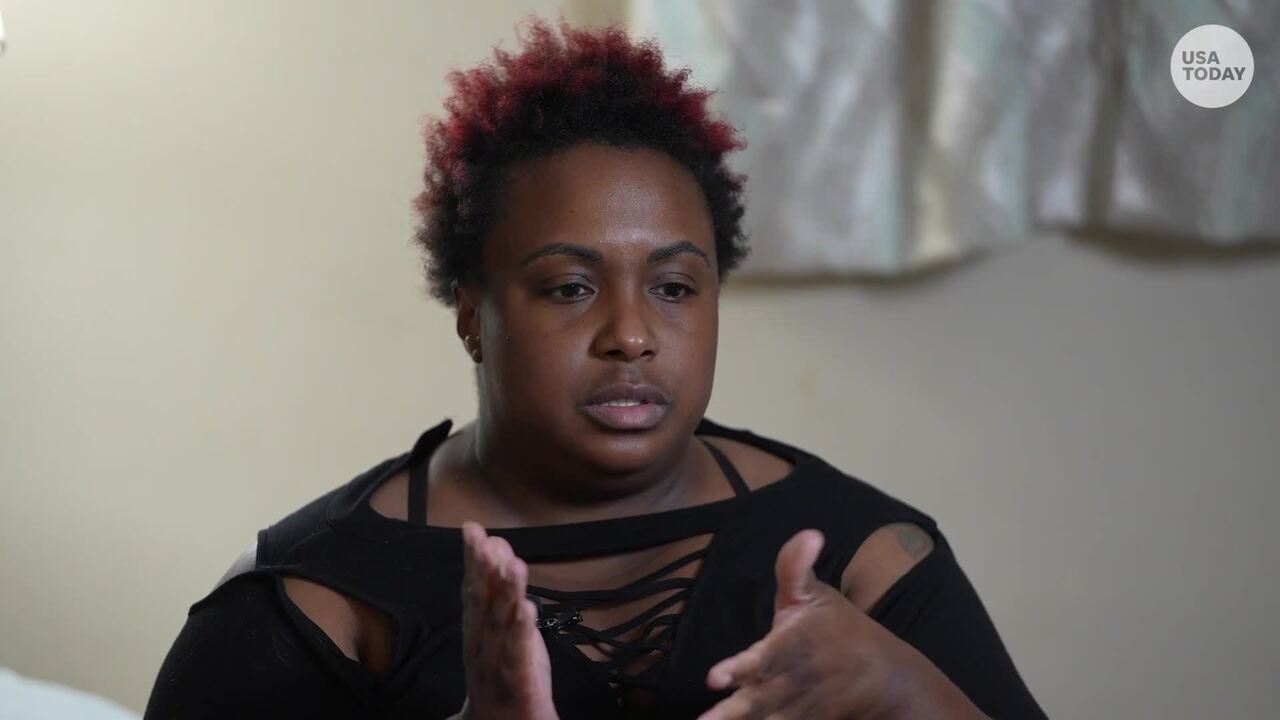
A homeless man from Montgomery, Jonathan Singleton, successfully challenged the state's panhandling bans as a violation of his free speech rights.

'Today it is me. Tomorrow it could be you'

Singleton was cited six times for violating a state law against soliciting contributions, including for holding a sign that read "HOMELESS. Today it is me, tomorrow it could be you" while standing in the grass near a highway exit.

Violators could be punished with fines up to $500 or three months in jail under one anti-begging law.Another measure sets fines up to $100 or as many as 10 days in jail for soliciting contributions from people in cars.

After Singleton filed a class-action lawsuit in 2020, lower courts blocked enforcement of the laws.

A federal appeals court based in Atlanta cited its previous decision in a different case from Florida that begging is speech protected by the First Amendment.

A three-judge panel of the 11th Circuit Court of Appeals said Alabama's laws are different from a ban on panhandling on Fort Lauderdale's beaches upheld in 1999,since those restrictions weren't citywide.

Alabama told theSupreme Courtthat officials need more leeway to address panhandling amid the homelessness crisis and a "dramatic growth" in policies aimed at dealing with the problem.

Advertisement

'Be practical.'Obama says Democrats need to change approach on homelessness

At the birth of the nation, states banned 'idleness' and 'wandering'

Alabama Attorney General Steve Marshall argued that begging was a crime at the start of the nation. So it should not be protected speech under the First Amendment.

"At the founding, States commonly prohibited idleness, wandering about with no course of business or fixed residence, begging in the streets, and the like," Marshall wrote in his appeal. "The basic theory, inherited from the English, was to distinguish those who could work [but refused] from those who could not."

More:20 US states sue to block Trump from restricting homelessness funding

A homeless man holds a sign on the streets of Providence, Rhode Island.

Is begging communication? Courts have said it is protected by First Amendment

Lawyers for Singleton, some of whom work for the Southern Poverty Law Center and the National Homelessness Law Center, countered that the historic laws Alabama cites "criminalized the conduct of voluntary idleness, not the communicative aspect of begging."

And even if they did cover begging, Singleton's lawyers said, First Amendment protections aren't determined by what laws were on the books at a single moment in time.

That's why Alabama's argument cuts against the position taken by courts across the country and against the Supreme Court's "long and unbroken line of precedent recognizing that speech seeking charitable relief is protected by the First Amendment," his lawyers wrote.

When initiating the lawsuit in 2020, theSouthern Poverty Law Center saidAlabama "should dedicate more resources to housing, shelter and health care that would meet those needs rather than jailing or ticketing people that ask for help."

This article originally appeared on USA TODAY:Supreme Court won't hear Alabama's bid to end protections for begging

Supreme Court sidesteps push in Alabama to scrap panhandling protections

WASHINGTON – A push by Republican states to ban panhandling was sidelined at theSupreme Court, which rejected on March 2 ...
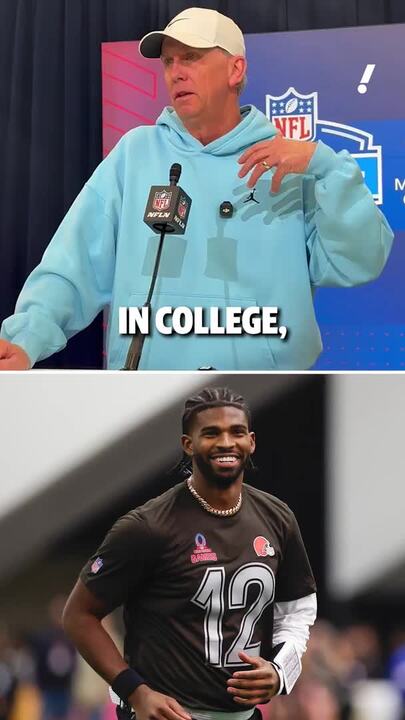
Browns reportedly acquire Tytus Howard in trade with Texans, sign him to 3-year, $63 million extension

With the Cleveland Browns trying to decide on their quarterback of the future, the team made a move Monday aimed at helping whoever winds up getting the job heading into 2026. The team reportedly acquired right tackle Tytus Howard in a trade with the Houston Texans and immediately signed Howard to a three-year, $63 million extension, according to Ian Rapoport of NFL Network.

Yahoo Sports

Howard, 29, has started 93 games over his seven-year career. In exchange for Howard, the Texans are reportedly receiving a fifth-round pick.

A former first-round pick by the Texans, Howard showed strong skills as a rookie, starting every game in which he was healthy before an injury ended his season. He performed well enough that he was named to the Pro Football Writers of America All-Rookie Team.

Advertisement

Howard has served as a consistent starter with the Texans since then. While he's dealt with various injuries, he hasn't missed a ton of time, starting at least 14 games in five of his seven seasons in the NFL.

Howard didn't grade out particularly well in Pro Football Focus' metrics in 2025. The offensive lineman ranked 58th at his position. Notably, however, he also did not allow a sack, per PFF's numbers.

The Browns could use more help on their offensive line. With the team likely to start either a new rookie or a developing, second-year player, Cleveland has every incentive to build its offensive line to give its young quarterback more time to see the field. The team allowed 51 sacks in 2025, which ranked as the eighth worst in the NFL.

After parting ways with Kevin Stefanski in the offseason, the Browns hired former Baltimore Ravens offensive coordinator Todd Monken as their new head coach. The 60-year-old Monken hasn't indicated which player will start at quarterback in 2026. If the team doesn't draft a prospect in the early rounds of the 2026 NFL Draft, Monken could go with second-year players Shedeur Sanders or Dillon Gabriel, or turn to veteran Deshaun Watson under center.

Browns reportedly acquire Tytus Howard in trade with Texans, sign him to 3-year, $63 million extension

With the Cleveland Browns trying to decide on their quarterback of the future, the team made a move Monday aimed at he...
'We are out of tears.' Americans share hope, concern after strikes

As news broke that the United States launchedmilitary strikes across Iranthat killed Supreme Leader AyatollahAli Khamenei, Americans thousands of miles away gathered nationwide to protest as mixed emotions rippled through communities with close ties to the region.

USA TODAY

Demonstrators gathered in U.S. cities, big and small, fromNew York City,Washington, DC, andLos AngelestoWaynesboro, Virginia, andWorcester, Massachusetts. In Detroit, student groups from various universities were already set for a Feb. 28 meeting centered on U.S. immigration policy, but added a protest to their plans upon learning of the Iran strikes.

More than 70 people showed up to Wayne State University's campus for the student-led demonstration that afternoon,The Detroit Free Press, part of the USA TODAY Network, reported. Kathy Anderson, of Plymouth, Michigan, lamented what she described as a deteriorating American political system, saying she was "embarrassed because we don't have our act together."

<p style=Smoke rises following an explosion, after Israel and the U.S. launched strikes on Iran, in Tehran, Iran, February 28, 2026.

" style="max-width:100%; height:auto; border-radius:6px; margin:10px 0;" loading="lazy" /> People gather at the site of a destroyed building at a school where, as the state media reports, several people were killed in an Israeli airstrike, following strikes by the United States and Israel against Iran, in Minab, Iran in this screengrab obtained from a social media video released on February 28, 2026. Iranian state media reported on February 28 that Israel struck a school in southern Iran, resulting in 40 deaths. Smoke rises following an explosion, after Israel's Defence Minister Israel Katz said Israel had launched a pre-emptive attack against Iran, in Tehran, Iran February 28, 2026 in this screen grab taken from video. Iranian people run for cover in Tehran, Iran, on February 28, 2026, as explosions are heard after a reported strike and Israel announced it had launched a <p style=Smoke rises following an explosion after the U.S. and Israel reportedly launched an attack against Iran, in Tehran, Iran, February 28, 2026, in this screen grab taken from video.

" style="max-width:100%; height:auto; border-radius:6px; margin:10px 0;" loading="lazy" /> A graffiti on a wall reads People run for cover following an explosion, after Israel said it launched a pre-emptive attack against Iran, in Tehran, Iran February 28, 2026. A plume of smoke rises after an explosion on February 28, 2026 in Tehran, Iran. After explosions were seen in the Iranian capital, the office of the Israeli Defense Minister issued a statement saying it had launched a preemptive strike against the country. <p style=A plume of smoke rises following a reported explosion in Tehran on February 28, 2026. Two loud blasts were heard in Tehran on February 28 morning by AFP journalists, and two plumes of thick smoke were seen over the centre and east of the Iranian capital.

Israel's defence ministry announced it had launched a "preemptive strike" on Iran as sirens sounded in Jerusalem and people across the country received phone alerts about an "extremely serious" threat.

" style="max-width:100%; height:auto; border-radius:6px; margin:10px 0;" loading="lazy" /> <p style=U.S. President Donald Trump pumps his fist after disembarking Air Force One at Palm Beach International Airport in West Palm Beach, Florida, U.S., February 27, 2026. Hours later, Trump made live comments about the military strikes he launched against Iran.

" style="max-width:100%; height:auto; border-radius:6px; margin:10px 0;" loading="lazy" /> A plume of smoke rises over Tehran after a reported explosion on February 28, 2026, after Israel said it carried out a A plume of smoke rises following a reported explosion in Tehran on February 28, 2026. Two loud blasts were heard in Tehran on February 28 morning by AFP journalists, and two plumes of thick smoke were seen over the centre and east of the Iranian capital. Israel's defence ministry announced it had launched a <p style=Buildings inin Tehran stand after Israel and the U.S. launched strikes on Iran, February 28, 2026.

" style="max-width:100%; height:auto; border-radius:6px; margin:10px 0;" loading="lazy" /> Iranians try to clear a street amid heavy traffic in Tehran, Iran, on February 28, 2026, as explosions are heard following a reported strike and Israel announced it had launched a Smoke rises from the site of an Israeli airstrike that targeted the southern Lebanese area of al-Qatrani on February 28, 2026. Lebanon's foreign minister said on February 24 his country feared its infrastructure could be hit by Israeli strikes if the situation with Iran escalates, after Israel intensified its attacks on Tehran-backed Hezbollah Anti-riot police stand in front of state building that is covered with a giant anti-U.S. billboard depicting the destruction of a US aircraft carrier in downtown Tehran on a main street in Tehran on February 21, 2026 in Tehran, Iran. In recent weeks, the United States had moved vast numbers of military vessels and aircraft to Europe and the Middle East. The US and Israel proceeded to launched strikes on Iran on February 28, 2026,

Latest photos capture US and Israeli strikes against Iran

Smoke rises following an explosion,after Israel and the U.S. launched strikes on Iran, in Tehran, Iran, February 28, 2026.

"There has been no clear objective expressed in terms of why we're there," she added. "Are we there to destroy the nuclear program? Are we there to overturn the regime? Are we there to protect protesters? Why are we there?"

PresidentDonald Trumpand others in his administration have maintained that Iran was taking steps to build a nuclear weapon, posing a grave threat to the United States. Experts previously told USA TODAY such claims are based on assumptions that areeither wrong or greatly exaggerated.

'You can't bomb people into liberation'

According toa Reuters/Ipsos pollreleased less than 48 hours after the United States and Israellaunched their joint military operation, only one in four Americans approve of the Iran strikes. Speakers ata protest at Worcester City Hallin Massachusetts were skeptical if the strikes would improve Iranian lives, condemning what they described as the financial and moral cost of more warfare in the Middle East.

The strikes sparked fear among some that civil unrest in the country of 92 million people would cause more suffering. By mid-day Feb. 28, the Iranian Red Crescent reported that at least 200 people had been killed and more than 700 wounded, including Khamenei, Iran's longtime leader known for repressive rule and anti-Western foreign policy.

ThreeAmerican troops were killed, and several others were seriously injured during the operation.

Megan Giulianelli, who left Iran four decades ago and now lives in New Jersey,cried as she recountedhearing about a strike on an all-girls primary school that an Iranian official saidkilled more than 100 people.Most Iranians, she said, wanted to end a regime that has been "terrorizing people for 47 years," but the joint strikes are "the worst-case scenario."

"You can't bomb people into liberation," she said through tears. "What are they thinking?"

Advertisement

'Price that's really being paid.'Iranian Americans divided in reactions to US attacks

Student after strikes: 'We were waiting for this moment'

For others, the news of the strikes was welcomed with joy.

Somestudents at the University of Wisconsin-Milwaukeecelebrated Khamenei's death with pastries in the school's student union. Narges Khodadadi, a PhD student and president of the school's Iranian Student Association, acknowledged concerns about the future but said she and many others in Iran, including her own family members, are happy and hopeful for brighter days ahead.

"We were waiting for this help and praying for it for a long time," Khodadadi told theMilwaukee Journal Sentinel, part of the USA TODAY Network. "We had two very hard and sad months, and we were waiting for this moment."

Nafiseh Najafi, the owner of a Persian restaurant in Nashville, Tennessee, who was born in Tehran, described the action as anecessary step toward liberationfor the Iranian people.

"Iranians around the world are excited, they are happy," she said. "They are outside, they are celebrating."

<p style=A person holds a sign during a Stop the War on Iran protest at Times Square in New York City on February 28, 2026. The US and Israel launched an attack of unprecedented scale against Iran on Saturday.

" style="max-width:100%; height:auto; border-radius:6px; margin:10px 0;" loading="lazy" /> Demonstrators hold Iranian flags, during an anti-war with Iran protest rally and march, following strikes by Israel and the U.S. on Iran, in Washington D.C., U.S., February 28, 2026. People gather in Times Square as the nation reacts to Demonstrators take part in an anti-war with Iran protest rally and march, following strikes by Israel and the U.S. on Iran, in Washington D.C., U.S., February 28, 2026. People hold signs as they take part in a <p style=People attend the Stop the War on Iran protest at Times Square in New York City on February 28, 2026. The US and Israel launched an attack of unprecedented scale against Iran on Saturday.

" style="max-width:100%; height:auto; border-radius:6px; margin:10px 0;" loading="lazy" /> <p style=People attend the Stop the War on Iran protest at Times Square in New York City on February 28, 2026.

" style="max-width:100%; height:auto; border-radius:6px; margin:10px 0;" loading="lazy" /> Protestors were out on East Market Street in Springettsbury Township, Pa., the morning after the U.S. and Israel bombed Iran on Feb. 28, 2026. Protestors were out on East Market Street in Springettsbury Township, Pa., the morning after the U.S. and Israel bombed Iran on Feb. 28, 2026. People gather in Times Square as the nation reacts to Demonstrators take part in an anti-war with Iran protest rally and march, following strikes by Israel and the U.S. on Iran, outside the White House, in Washington D.C., U.S., February 28, 2026. Demonstrators take part in an anti-war with Iran protest rally and march, following strikes by Israel and the U.S. on Iran, in Washington D.C., U.S., February 28, 2026.

Americans protest 'massive' strikes in Iran amid US-Israeli attack

A person holds a sign during a Stop the War on Iran protest at Times Square in New York City on February 28, 2026.The US and Israel launched an attack of unprecedented scale against Iranon Saturday.

'We are out of tears'

R.A. Kashanipour, an Arizona-based Iranian American whose family mostly remains in Iran, had a different perspective. The conflict leaves Iranians "caught between authoritarians," hetold The Arizona Republic, part of the USA TODAY Network.

He was worried the attack would lead to more violence among Iranians.

"Too much bloodshed has flowed already," Kashanipour told the outlet in a text message. "Unfortunately, it looks like there will be more to come. We are out of tears."

Bryan Costello, a Phoenix resident, called for the United States to "work towards peace" in an interview with the newspaper at the city's March for Life rally on Feb. 28.

"I understand that sometimes peace can only come by the sword, but we have to be more careful in how we do anything," he said.

Contributing:Michael Collins and Francesca Chambers, USA TODAY; Natalie Davies, The Detroit Free Press; Alec Johnson, Milwaukee Journal Sentinel; Meg Trogolo, Telegram & Gazette; Hannan Adely, The Record; Molly Davis, The Tennessean; Jose R. Gonzalez, The Arizona Republic

This article originally appeared on USA TODAY:Americans express shock and hope after deadly US-Israel strikes

'We are out of tears.' Americans share hope, concern after strikes

As news broke that the United States launchedmilitary strikes across Iranthat killed Supreme Leader AyatollahAli Khamenei...
World hurries to respond to rapidly changing war around Iran

TOKYO (AP) — A shaken world reacted with anger and confusion — and more involvement than expected, in some cases — Monday as the coordinated U.S.-Israeli attacks on Iran over the weekend sprawled into a regional war.

Associated Press British Prime Minister Sir Keir Starmer speaks with students and staff, during a visit to the Walbottle Academy Campus in Newcastle-upon-Tyne, England, Thursday, Feb. 26, 2026. (Scott Heppell/PA via AP) German Chancellor Friedrich Merz speaks before media members as he visits facilities of Siemens Energy during his official visit, in Hangzhou, China, Thursday, Feb. 26, 2026. (Andres Martinez Casares/Pool Photo via AP)

Britain Politics

Advertisement

The first details of possible effects on Iran's nuclear program, the issue at the center of the escalating conflict, began to emerge. More allies of the U.S. and Israel engaged, as did Iran's armed proxies. And countries from the Gulf to Cyprus found themselves in the line of fire.

Fast-paced diplomacy was required as the missiles and drones kept coming. Borders closed, embassies emptied and allies sent military reinforcements.

Open support, and some silence

Many nations refrained from commenting directly on the initial U.S.-Israeli joint strikes but condemned Tehran's retaliation, perhaps mindful of U.S. President Donald Trump.Other governments criticized Iran's strikes on Arab neighbors while staying silent on the U.S. and Israeli military action.Canada — not shy about its frustration with the Trump administration — expressed open support for the U.S. strikes, along with Australia.Russia, Chinaand Spain responded with sometimes sharp criticism. Russia's foreign ministry accused the U.S. and Israel of "hiding behind" concerns about Iran's nuclear program while actually pursuing regime change.India called for dialogue. "There will have to be a dialogue at some point," the head of the U.N. nuclear watchdog, Rafael Grossi, said.With thousands of citizens of countries around the world stranded at airports or on cruise ships, and some from countries like the Philippines and China killed in the exchanges of fire, more nations have a stake in what comes next.All will have the chance for more say as international groups convene in urgent calls and meetings, after the U.N. Security Council gathered in emergency session on Saturday, hours after strikes began.Pitching in to stop IranIn a statement, British Prime Minister Keir Starmer, French President Emmanuel Macron and German Chancellor Friedrich Merz called on the United States and Iran to resume talks over Iran's nuclear program and said they favored a negotiated settlement. Saturday's strikes began two days after the latest round of talks.The three countries haveled effortsto reach a negotiated solution over Iran's nuclear program.At the same time, Britain, France and Germany said they were ready to help with efforts to keep Iran from firing more missiles and drones.But countries tried to make clear how far they might go. Germany will not actively participate in military action against Iran but will consider defending its soldiers stationed on multinational military bases in Jordan and Iraq if they are attacked, German Foreign Minister Johann Wadephul said Monday.Britain stressed that it was "not at war," although it said it would now permit the U.S. to use joint bases to strike Iran, pointing to Iran's "scorched-earth strategy."Top diplomats of six Gulf states — Qatar, Saudi Arabia, the United Arab Emirates, Kuwait, Oman and Bahrain — after an emergency meeting called on Iran to immediately halt its attacks and asserted their right to self-defense.A plea for talks, tooOman, which was facilitating the nuclear talks and tried to keep the U.S. and Iran at the table as tensions soared, said the U.S. action "constitutes a violation of the rules of international law and the principle of settling disputes through peaceful means." Oman, too, like other Gulf nations reported attacks that came uncomfortably close to home.But Oman's Foreign Minister Badr al-Busaidi said after the second full day of hostilities that "the door to diplomacy remains open."Meanwhile, some states were shaken into saying something different.The 22-nation Arab League, which has historically condemned both Israel and Iran for actions it says risk destabilizing the region, called the Iranian attacks "a blatant violation of the sovereignty of countries that advocate for peace and strive for stability."And Syria was among Iran'sclosest regional alliesand a staunch critic of Israel under former President Bashar Assad, yet its foreign ministry singularly condemned Iran, reflecting the new government's efforts to rebuild ties with regional economic heavyweights and the United States.Concerns about oil and nuclear assetsChina, a significant buyer of Iranian oil, said it was "highly concerned" about the U.S. and Israeli strikes called for an immediate halt to the military action and return to negotiations.But Japanese Prime Minister Sanae Takaichi on Monday played down growing worry about the economic impact on oil shipments from the Middle East, saying Japan has oil reserves at home that can last for several months.The Nobel Peace Prize-winning International Campaign to Abolish Nuclear Weapons condemned the U.S. and Israeli strikes on Iran. And European Union leaders in a joint statement called for restraint and diplomacy in hopes of "ensuring nuclear safety."___Associated Press writers around the world contributed.

Many nations refrained from commenting directly on the initial U.S.-Israeli joint strikes but condemned Tehran's retaliation, perhaps mindful of U.S. President Donald Trump.

Other governments criticized Iran's strikes on Arab neighbors while staying silent on the U.S. and Israeli military action.

Canada — not shy about its frustration with the Trump administration — expressed open support for the U.S. strikes, along with Australia.

Russia, Chinaand Spain responded with sometimes sharp criticism. Russia's foreign ministry accused the U.S. and Israel of "hiding behind" concerns about Iran's nuclear program while actually pursuing regime change.

India called for dialogue. "There will have to be a dialogue at some point," the head of the U.N. nuclear watchdog, Rafael Grossi, said.

With thousands of citizens of countries around the world stranded at airports or on cruise ships, and some from countries like the Philippines and China killed in the exchanges of fire, more nations have a stake in what comes next.

All will have the chance for more say as international groups convene in urgent calls and meetings, after the U.N. Security Council gathered in emergency session on Saturday, hours after strikes began.

Pitching in to stop Iran

In a statement, British Prime Minister Keir Starmer, French President Emmanuel Macron and German Chancellor Friedrich Merz called on the United States and Iran to resume talks over Iran's nuclear program and said they favored a negotiated settlement. Saturday's strikes began two days after the latest round of talks.

The three countries haveled effortsto reach a negotiated solution over Iran's nuclear program.

At the same time, Britain, France and Germany said they were ready to help with efforts to keep Iran from firing more missiles and drones.

But countries tried to make clear how far they might go. Germany will not actively participate in military action against Iran but will consider defending its soldiers stationed on multinational military bases in Jordan and Iraq if they are attacked, German Foreign Minister Johann Wadephul said Monday.

Britain stressed that it was "not at war," although it said it would now permit the U.S. to use joint bases to strike Iran, pointing to Iran's "scorched-earth strategy."

Top diplomats of six Gulf states — Qatar, Saudi Arabia, the United Arab Emirates, Kuwait, Oman and Bahrain — after an emergency meeting called on Iran to immediately halt its attacks and asserted their right to self-defense.

A plea for talks, too

Oman, which was facilitating the nuclear talks and tried to keep the U.S. and Iran at the table as tensions soared, said the U.S. action "constitutes a violation of the rules of international law and the principle of settling disputes through peaceful means." Oman, too, like other Gulf nations reported attacks that came uncomfortably close to home.

But Oman's Foreign Minister Badr al-Busaidi said after the second full day of hostilities that "the door to diplomacy remains open."

Meanwhile, some states were shaken into saying something different.

The 22-nation Arab League, which has historically condemned both Israel and Iran for actions it says risk destabilizing the region, called the Iranian attacks "a blatant violation of the sovereignty of countries that advocate for peace and strive for stability."

And Syria was among Iran'sclosest regional alliesand a staunch critic of Israel under former President Bashar Assad, yet its foreign ministry singularly condemned Iran, reflecting the new government's efforts to rebuild ties with regional economic heavyweights and the United States.

Concerns about oil and nuclear assets

China, a significant buyer of Iranian oil, said it was "highly concerned" about the U.S. and Israeli strikes called for an immediate halt to the military action and return to negotiations.

But Japanese Prime Minister Sanae Takaichi on Monday played down growing worry about the economic impact on oil shipments from the Middle East, saying Japan has oil reserves at home that can last for several months.

The Nobel Peace Prize-winning International Campaign to Abolish Nuclear Weapons condemned the U.S. and Israeli strikes on Iran. And European Union leaders in a joint statement called for restraint and diplomacy in hopes of "ensuring nuclear safety."

Associated Press writers around the world contributed.

World hurries to respond to rapidly changing war around Iran

TOKYO (AP) — A shaken world reacted with anger and confusion — and more involvement than expected, in some cases — Monday...
169 people killed after insurgents raid a village in a remote area of South Sudan

JUBA, South Sudan (AP) — At least 169 people were killed after insurgents raided a village in a remote area ofSouth Sudan, a local official said Monday, It's the latest bout ofsporadic violencethat has left the country teetering on the verge of full-blown civil war.

Associated Press

The victims, including 90 civilians, were attacked on Sunday in Abiemnom county, said James Monyluak, information minister for the administrative area of Ruweng.

He said women and children were among the dead, in addition to dozens of combatants.

The U.N. Mission in South Sudan, known as UNMISS, said in a statement that 1,000 people sought shelter at its base after the attack.

"Such violence places civilians at grave risk and must stop immediately," Anita Kiki Gbeho, a UNMISS official, said in a statement. "I urge all involved to cease hostilities without delay and engage in constructive dialogue to address their grievances."

"Our peacekeepers will continue to do everything within their capabilities to protect civilians seeking refuge at our base," she added.

The UNMISS statement cited 23 wounded in the attack in Ruweng, as well as concern over "reports indicating that dozens of civilians and some local officials have lost their lives."

The killings are part of anescalating wave of violencegripping South Sudan as government forces loyal to President Salva Kiir battle armed men who are believed to be loyal to opposition leader Riek Machar.

Advertisement

Stephano Wieu De Mialek, the chief administrator of Ruweng Administrative Area, said on Sunday that the assault was conducted by elements linked to the White Army militia alongside forces affiliated with Machar's Sudan People's Liberation Movement-in-Opposition. Wieu described the attack as a coordinated and organized assault, calling it an act of rebellion.

In a statement, Machar's group denied responsibility for the attack and asserted that it "has no military presence in the area concerned."

Machar was Kiir's deputy until September, when he was removed after he faced criminal charges. He is under house arrest in Juba, the South Sudan capital, as his trial progresses.

The U.S. is urging talks between Kiir and Machar.

Ongoing violence threatens a fragile peace reached in 2018 after a five-year civil war. After that agreement, Machar was named South Sudan's first vice president in a government of national unity. A U.N. inquiry has found that South Sudan's leaders are "systematically dismantling" that agreement.

Machar's supporters say the charges against him for alleged subversion are politically motivated. His removal from office coincided with a sharp increase in violence.

The conflict escalated in December when opposition forces seized government outposts in the county of Jonglei, an opposition stronghold and a flashpoint in renewed fighting that the U.N. estimates has displaced 280,000 people.

Aid groups have warned thataccess restrictionsto opposition-held parts of the state are endangering civilian lives.

The government has conducted a counteroffensive since January with aerial bombardments and ground assaults, despite an official commitment to the peace agreement.

169 people killed after insurgents raid a village in a remote area of South Sudan

JUBA, South Sudan (AP) — At least 169 people were killed after insurgents raided a village in a remote area ofSouth Sudan...


FORTE JRNL © 2015 | Distributed By My Blogger Themes | Designed By Templateism.com