Another lopsided title game loss stings South Carolina, but Gamecocks should be good again next year

PHOENIX (AP) — South Carolina's quest to win a fourth national title ended in ugly fashion for a second straight season when theGamecocks lost to UCLA 79-51in the NCAA women's basketball title game on Sunday.

Associated Press South Carolina guard Tessa Johnson (5) reacts after a play against UCLA during the second half of the women's National Championship Final Four NCAA college basketball tournament game, Sunday, April 5, 2026, in Phoenix. (AP Photo/Ross D. Franklin) South Carolina head coach Dawn Staley motions towards the court against UCLA during the second half of the women's National Championship Final Four NCAA college basketball tournament game, Sunday, April 5, 2026, in Phoenix. (AP Photo/Ross D. Franklin) South Carolina head coach Dawn Staley motions towards the court during the first half of the women's National Championship Final Four NCAA college basketball tournament game against UCLA, Sunday, April 5, 2026, in Phoenix. (AP Photo/Rick Scuteri)

NCAA South Carolina UCLA Basketball

Even so, the monster program that Dawn Staley has built over the past 15 years doesn't look like it's going anywhere.

South Carolina should be one of the top contenders to make a seventh straight Final Four in 2027 and will have plenty of motivation after Sunday's miserable performance. The Gamecocks shot just 29% from the field and the 28-point margin was among the biggest in championship game history.

It's the second straight year South Carolina has fallen flat in the title game. The Gamecockslost 82-59 to UConnin the 2025 final.

Staley will undoubtedly stew over this loss for a while, but once she focuses on next season, there are lots of reasons for optimism. Leading scorer Joyce Edwards and Tessa Johnson are expected to return, while Madina Okot is seeking a fifth year of eligibility from the NCAA.

Veteran forward Chloe Kitts has said she'll be backafter missing this year with a torn ACL. There's also the possibility that forward Ashlyn Watkins could return after recovering from a knee injury and taking a year away from the program to focus on personal growth.

On top of that, there's a group of promising young players who were reserves on this year's team and a highly-rated recruiting class that includes guard Jerzy Robinson.

Advertisement

Staley will still have to work to do. The Gamecocks have to identify a new leader to replace Raven Johnson, who has excelled as a floor general during his five-year career.

Johnson had a dream career with the Gamecocks — even if it ended with a loss — never missing a Final Four and winning a pair of national championships.

She was sidelined most of the 2022 title run after tearing her ACL early in the season but was an important part of South Carolina's undefeated title in 2024, when the Gamecockstopped Caitlin Clark and Iowain the championship game.

Johnson became more of an offensive threat this season, averaging 10 points, but it's her leadership and defense that made her an indispensable part of this Gamecocks title run. In the semifinals, the 5-foot-8 guard matched up with UConn's 6-foot-2 Sarah Strong, stifling theAP Player of the Yearfor most of the night.

Now, the Gamecocks have to move on without her.

If recent history is any indication, South Carolina is well equipped for the challenge.

AP March Madness bracket:https://apnews.com/hub/ncaa-womens-bracketand coverage:https://apnews.com/hub/march-madness

Another lopsided title game loss stings South Carolina, but Gamecocks should be good again next year

PHOENIX (AP) — South Carolina's quest to win a fourth national title ended in ugly fashion for a second straight seas...
Cubs' Cade Horton placed on 15-day IL, set for tests after leaving 2nd start with forearm discomfort

CLEVELAND (AP) — Cubs starting pitcher Cade Horton will return to Chicago for more tests on his right arm after being forced to leave his second outing of 2026 in the second inning.

Associated Press Chicag Cubs' Cade Horton pitches in the first inning of a baseball game against the Cleveland Guardians in Cleveland, Friday, April 3, 2026. (AP Photo/Sue Ogrocki) Chicag Cubs' Cade Horton pitches in the rain in the first inning of a baseball game against the Cleveland Guardians in Cleveland, Friday, April 3, 2026. (AP Photo/Sue Ogrocki)

Cubs Guardians Baseball

The Cubs placed Horton on the 15-day injured list with a strained forearm on Sunday, two days after he felt discomfort throwing a pitch.To take his roster spot, the team recalled left-hander Riley Martin from Triple-A Iowa.

Horton, who went 11-4 with a 2.67 ERA as a rookie last season, will see team doctors on Monday, manager Craig Counsell said before the Cubs played the Guardians in a tradition doubleheader on Easter.

Counsell said it would likely be a few days before the team has all the medical opinions on Horton. The 24-year-old looked to the dugout for assistance after throwing a 93.8 mph fastball — slower than normal — to Cleveland's Bo Naylor on Friday. Horton was pulled from the game for right-hander Colin Rea.

"I had some tightness in my wrist and as the game went on, it went into my forearm," Horton said following the game. "I wanted to err on the cautious side and not hurt anything else. I just wanted to be smart about it and make a smart decision."

Advertisement

The Cubs also recalled right-hander Ethan Roberts as the 27th man for the doubleheader.

Martin will be making his first appearance for Chicago, which selected him in the sixth round in 2021 from Quincy University. The 28-year-old has worked his way up in the organization, going 6-2 with a 2.69 ERA for Iowa last season.

Counsell appreciates Martin's rise from Division II ball to the majors. He's 24-13 with a 3.76 ERA in 174 minor league appearances.

"Riley is someone over the course of his career who has continued to get better and that puts you on the map," Counsell said.

AP MLB:https://apnews.com/hub/MLB

Cubs' Cade Horton placed on 15-day IL, set for tests after leaving 2nd start with forearm discomfort

CLEVELAND (AP) — Cubs starting pitcher Cade Horton will return to Chicago for more tests on his right arm after being for...
Story of the birth of ESPN will be showcased in a documentary on Monday night

ESPN is literally going back to the beginning on Monday night when it debuts a 90-minute documentary about its creation.

Associated Press

"Sports Heaven: The Birth of ESPN" will premieres at 8:30 p.m. EDT. It will air the same night as the championship game of the NCAA Tournament, an event that helped put the network on the map by showing early-round games.

The documentary showcases Bill Rasmussen and his son, Scott Rasmussen, as they bring to life the idea of a network that would carry sports around the clock.

"Many people claim to be the founders of ESPN. The founders are most definitely Bill and Scott Rasmussen," said Rosa Gatti, who was ESPN's publicist from 1980 through 2013.

Bill Rasmussen's original idea was a cable channel covering only Connecticut sports. Many cable operators in the state were skeptical, but someone suggested buying satellite time to reach a national audience.

The documentary also covers how the Rasmussens secured financial backing from Getty Oil, a rights deal with the NCAA, and built a studio in Bristol, Connecticut, still under construction when ESPN went on the air on Sept. 7, 1979.

The Getty investment and the deal with the NCAA occurred on the same day.

"When someone tells you you can't do something, you want to prove them wrong," Bill Rasmussen said. "Many, many people told us there wasn't enough sports to do a 24-hour channel. I didn't argue with anybody. I just thought they were wrong and I was right."

The first minutes of ESPN going on the air are shown, along with the frantic four hours before the debut. George Grande welcomed viewers to the first "SportsCenter" broadcast before the network's first live event, a slow-pitch softball game between the Kentucky Bourbons and the Milwaukee Schlitz.

Advertisement

"In those days, we didn't know if we'd last four weeks, four years, let alone 40-some, but we knew it was special," Grande said. "Bottom line was Bill Rasmussen was the true pervader of the original American dream, and he gave us all something very special that we still have today."

In an ESPN blog post previewing the documentary, Scott Rasmussen said his estimate of how many households the network would reach by the end of the 1980's was a little off.

"I estimated that ESPN would be in 30 million cable households by the end of the '80s. That certainly seemed aggressive at a time when only 12 million households in the country had cable television," he wrote. "When all was said and done, my numbers were way off. Rather than my optimistic projection of 30 million households, ESPN ended up in nearly 60 million households by the end of the '80s!

"That success says more about the tens of thousands of people who worked at ESPN after I left than it does about my projections. My work showed what was possible; their work made it happen."

The Rasmussens were forced out of ESPN in 1980. At the time, Getty owned 85% of the network.

Bill Rasmussen and the network were estranged until 1999, when company executives invited him to the 20th anniversary celebration. Since then, he has been embraced and recognized for his vision of creating an all-sports network. He toured the country in 2019 for the 40th anniversary and gave speeches at Walt Disney Company and ESPN events.

The documentary marks the first time Scott Rasmussen has spoken at length about the network's birth and its early days.

"There was a whole lot of chutzpah and a whole lot of vision, and they're maxed out on their credit cards. It's the American dream," said Bob Ley, one of the network's original anchors.

AP sports:https://apnews.com/sports

Story of the birth of ESPN will be showcased in a documentary on Monday night

ESPN is literally going back to the beginning on Monday night when it debuts a 90-minute documentary about its creation. ...
Viral bald eagles Jackie and Shadow welcome pair of eaglets

Viral bald eagles Jackie and Shadow are now parents to another pair of eaglets after both eggs hatched over the weekend.

Good Morning America

The first chick fully broke free from its egg Saturday at 9:33 p.m. PT after about 36 hours of hatching, according to a Facebookpostby Friends of Big Bear Valley, the nonprofit that operates 24/7 cameras and livestreams of the nest in California.

Viral bald eagles Jackie and Shadow welcome 1st eggs of 2026

The second chick hatched Sunday morning and was considered fully out of the shell at about 8:30 a.m., the nonprofit said.

Around the time of the second hatch, the first chick was seen receiving its first successful feeding.

Early feedings can be difficult because newly hatched eaglets do not yet have strong neck muscles, earning them the nickname "bobbleheads," according to the nonprofit.

Advertisement

Friends of Big Bear Valley - PHOTO: Viral bald eagles Jackie and Shadow are now parents of two eaglets after both eggs hatched over the weekend, according to Friends of Big Bear Valley, the nonprofit that operates 24/7 cameras and livestreams of the nest.

At this stage, the chicks are fed small bites of fish or other prey, and the parents' saliva, which contains electrolytes and antibodies, helps give the eaglets a healthy start.

Video from the nest showed the fluffy hatchlings moving around as viewers watched the moment live online.

Shadow later returned to the nest and was seen settling in beside the two eaglets as the pair began caring for their newly hatched chicks.

"Both chicks are doing well, looking great and their journey has just begun," the nonprofit wrote in the post. "Congratulations on your 2 beautiful fluff balls, Jackie & Shadow! Thank you for being a part of this wonderful eagle family."

Jackielaid the eggsin January in the pair's nest in the San Bernardino National Forest, where the eagles have drawn a large online following in recent years.

In both 2024 and 2025, Jackie laid three eggs. Last year, all three hatched, but one chick died after a winter storm in March. The two surviving eaglets were later namedSunny and Gizmo.

Wildlife watchers will continue monitoring the Big Bear nest in the coming weeks as the two newest eaglets grow.

Viral bald eagles Jackie and Shadow welcome pair of eaglets

Viral bald eagles Jackie and Shadow are now parents to another pair of eaglets after both eggs hatched over the weekend. ...
A mountain hideout and aircraft under fire: US carries out daring rescue of service member in Iran

The United States pulled off a daring rescue of two aviators whose fighter jet was shot down by Iran, plucking the pilot from behind enemy lines before setting off a complicated extraction of the second service member who hid deep in the mountains as Tehran called for Iranians to help capture him.

Associated Press In this image provided by Sepahnews, the Iranian Revolutionary Guard's official website, wreckage is shown at what Iran's state TV claimed was the site of a downed American transport plane and two helicopters involved in a rescue operation, in Isfahan province, Iran, April, 2026. (Sepahnews via AP) In this image provided by Sepahnews, the Iranian Revolutionary Guard's official website, wreckage is shown at what Iran's state TV claimed was the site of a downed American transport plane and two helicopters involved in a rescue operation, in Isfahan province, Iran, April, 2026. (Sepahnews via AP) In this image provided by Sepahnews, the Iranian Revolutionary Guard's official website, black smoke rises into the air at what Iran's state TV claimed was the site where an American transport plane and two helicopters involved in a rescue operation were shot down, in Isfahan province, Iran, April, 2026. (Sepahnews via AP)

Iran War

The CIA looked to throw off Iran's government before the crew member was found, launching a deception campaign to spread word inside the Islamic Republic that it had already located him.

Even as President Donald Trump and other U.S. officials described an almost cinematic mission, rescuers faced major obstacles, including two Black Hawk helicopters coming under fire and problems with two transport planes that forced the U.S. military to blow them up.

"This is the first time in military memory that two U.S. Pilots have been rescued, separately, deep in Enemy Territory," Trump wrote early Sunday on his Truth Social platform. "WE WILL NEVER LEAVE AN AMERICAN WARFIGHTER BEHIND!"

US officials stayed silent as the operation played out

In a pair of social media posts, Trump said the operation over the weekend required the U.S. to remain completely silent to avoid jeopardizing the effort, even as the president and top members of his administration continuously monitored the airman's location.

The White House and the Pentagon refused to publicly discuss details about the downed fighter jet for well over 24 hours after the initial crash, particularly about the first crew member rescued from the F-15E Strike Eagle— an effort that Trump later said took seven hours in broad daylight over Iran.

The United States and Iran's government then were both racing to find the second crew member, a weapons systems officer, whose location neither side knew.

The CIA spread word that the U.S. had found him and were moving him by ground to get him out of Iran, according to a senior Trump administration official who spoke on condition of anonymity to discuss details not yet made public.

The confusion allowed the CIA to uncover the location of the service member, who was hiding in a mountain crevice, the official said. The intelligence agency sent the coordinates to the Pentagon and the White House, where Trump ordered a rescue operation.

Iran urged the public to look for the 'enemy pilot'

Meanwhile, an anchor on a channel affiliated with Iranian state television had been urging residents in the mountainous region of southwest Iran where the fighter jet went down to hand over any "enemy pilot" to police and promised a reward for anyone who did.

Trump said the American aviator was being "hunted down" by enemies who were "getting closer and closer by the hour." The United States was monitoring his location continuously, he said.

At the right moment, Trump said, he directed the military to send dozens of heavily armed aircraft to rescue the crew member, who the president said is "seriously wounded" but will recover.

Iranian state media reported that airstrikes in southwestern Iran on Saturday killed at least three people and wounded others, in the same area where the missing American crew member was believed to be.

Advertisement

American rescuers face obstacles with aircraft during the operation

The American rescue mission ran into major challenges behind enemy lines. Iran's joint military command claimed it struck two U.S. Black Hawk helicopters taking part in the operation.

A person familiar with the situation said the two helicopters were able to navigate to safe airspace, although it's unclear if they landed or if crew members were injured. The person spoke on the condition of anonymity to discuss the sensitive information.

Then, the U.S. military was forced to bring in additional aircraft to complete the rescue of the second service member due to a technical malfunction, according to a regional intelligence official briefed on the mission. The U.S. blew up two transport planes it was forced to leave behind because of the mishap, said the official, who spoke on condition of anonymity to discuss the covert mission.

Iran's state television on Sunday aired a video showing what it claimed were parts of a U.S. aircraft shot down by Iranian forces, along with a photo of thick, black smoke rising. The broadcaster said Iran had shot down a transport plane and two helicopters that were part of the rescue operation.

Iran's joint military command said the destroyed aircraft included two C-130 military transport aircraft and two Black Hawk helicopters in the province of Isfahan, where the rescue took place.

"The fact that we were able to pull off both of these operations, without a SINGLE American killed, or even wounded, just proves once again, that we have achieved overwhelming Air Dominance and Superiority over the Iranian skies," Trump said on social media.

A second US military jet also was shot down

Trump, however, did not mention that a second military jet also went down the same day as the F-15E.

Iranian state media said Friday that a U.S. A-10 attack aircraft crashed after being struck by Iran's defense forces.

A U.S. official, speaking on condition of anonymity to discuss a sensitive military situation, confirmed a second U.S. Air Force combat aircraft went down in the Middle East on Friday.

An additional U.S. pilot was rescued but details were not available given the security concerns, another person familiar with the situation said.

Neither provided more information, including whether it was the A-10.

Kim and Lee reported from Washington, and Magdy from Cairo. Associated Press writers Lisa Mascaro and Konstantin Toropin in Washington, Farnoush Amiri in New York and Julia Frankel in Jerusalem contributed to this report.

A mountain hideout and aircraft under fire: US carries out daring rescue of service member in Iran

The United States pulled off a daring rescue of two aviators whose fighter jet was shot down by Iran, plucking the pilot ...
Trump again threatens Iran's infrastructure ahead of his latest Strait of Hormuz deadline

President Donald Trump has threatened major strikes on Iran's energy infrastructure and bridges ahead of his latest deadline to open the Strait of Hormuz.

NBC Universal

He used an expletive, referred to Islam and described Iran's leadership as "crazy bastards" Saturday on Truth Social, repeating past threats if Iran misses the deadline.

In a post on Truth Social, Trump threatened a major bombing campaign on Tuesday.

Trump has previously threatened to bomb Iran's energy infrastructure before he delayed action, citing what he says are ongoing negotiations. On March 21, Trump said Iran had a 48-hour deadline to open the strait "without threat" or the U.S. would "hit and obliterate" its power plants.

He then extended an initial five-day deadline to Monday before he warned Iran on Saturday that it had 48 hours to make a deal or "all Hell will reign down upon them."

On Sunday, Trump posted, "Tuesday, 8:00 P.M. Eastern Time!" The White House did not immediately respond to a request for clarification on the deadline.

An attack on civilian infrastructure can be considered a war crime under international law.

Responding to Trump's post on NBC News' "Meet the Press," Sen. Tim Kaine, D-Va., said rhetoric from the administration had been "embarrassing and juvenile."

He told moderator Kristen Welker: "People see this president as having blundered into a war with no clear rationale, and there's no amount of cursing or boasting or tough talk that will cover up for the fact that this president didn't have a rationale and he doesn't really have a plan."

Advertisement

In aninterview with Axios, Trump said that there was a "good chance" that the U.S. and Iran could come to a deal by Tuesday but added that "if they don't make a deal, I am blowing up everything over there."

He made similar comments in anABC News interview, saying that if Iran does not come to a deal, "we're blowing up the whole country."

Iran has effectively shut down theStrait of Hormuz,a trade route through which 20% of the world's oil passes, by striking ships in response to U.S.-Israeli attacks.

Rising energy, shipping and fertilizer costsfueled by Tehran's stranglehold on the strait are already being felt in the U.S. and around the world, with sharper consequences expected to fall on poorer, import-dependent countries.

While Iran has denied holding direct or indirect negotiations with the U.S. and rejected calls for a ceasefire, the two sides have acknowledged having exchanged messages through intermediaries. It is unclear whether anything has resulted from the discussions, with thousands more U.S. troops arriving in the Middle East last week as the war continues to escalate.

Trump has repeatedly signaled he is looking to draw the conflict to an end within weeks, and he has made conflicting statements about whether he could end the war without reopening the strait, which he has said the U.S. "doesn't need."

In an address Wednesday, he said that "the countries of the world that do receive oil" through the strait should "grab it and cherish it."

Iran has insisted the strait remains open to vessels from friendly countries, with a reduced number of ships having safely made the passage during the conflict. In March, Iranian media reports ‌quoted Iran's representative to the U.N. maritime agency as saying vessels except those linked to "Iran's enemies" would be allowed through.

Shipping industry experts say some ships are being charged millions of dollars to transit,with some oil tankers forced to take a new routein the Strait of Hormuz through a narrow passage controlled by Iran's Islamic Revolutionary Guard Corps, according to maritime data shared with NBC News.

Trump again threatens Iran's infrastructure ahead of his latest Strait of Hormuz deadline

President Donald Trump has threatened major strikes on Iran's energy infrastructure and bridges ahead of his latest d...
Ty Simpson and Garrett Nussmeier: A deep dive on the NFL Draft's 'other two' QBs

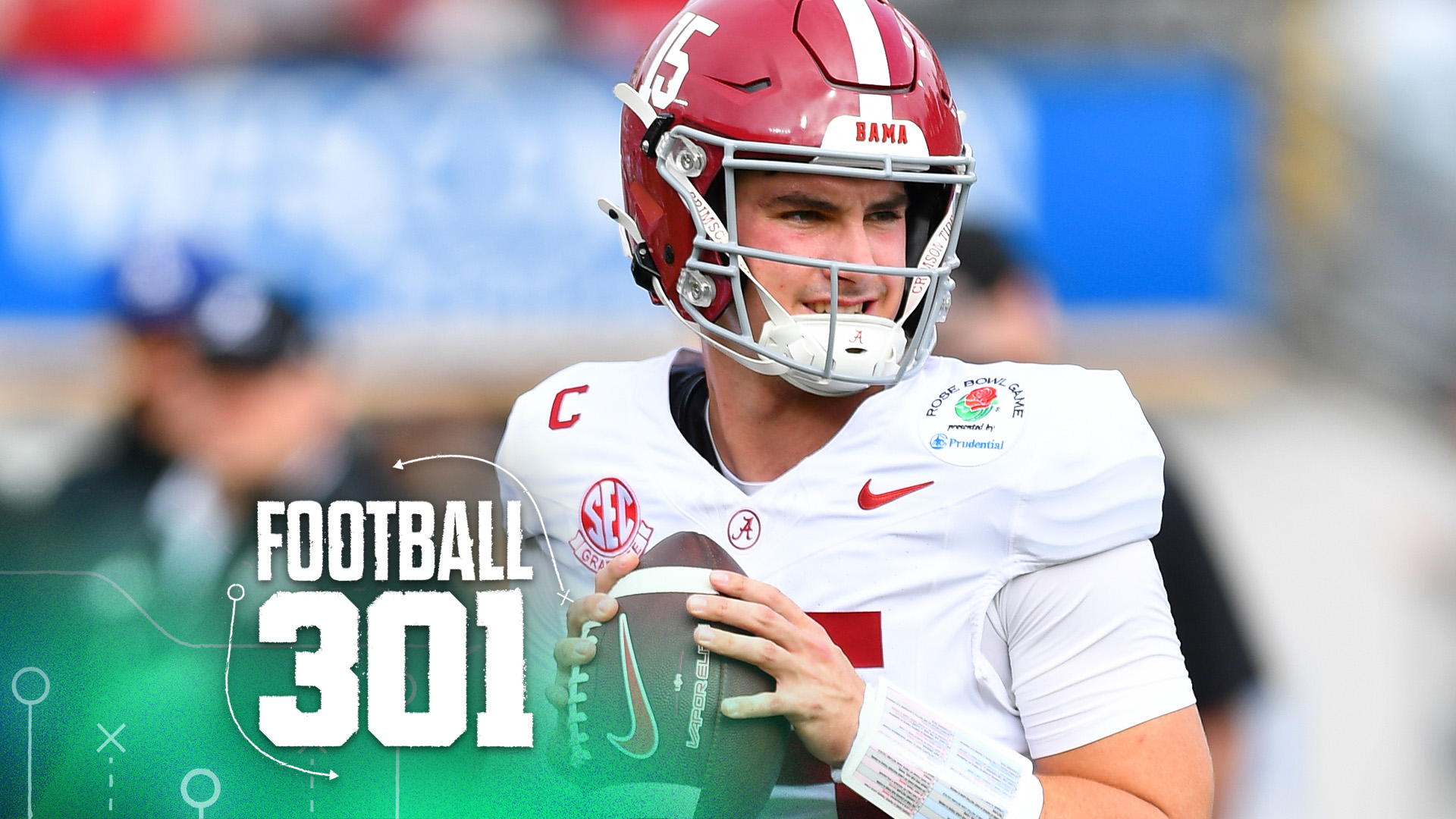
TheNFL Draftalways leads to surprises. Those surprises, whether it's an unexpectedly early selection or a surprise fall, combined with the heavy dosage of hopium that gets pumped out of television and computer screens every time that little bell notification goes off, is what makes what used to be a glorified conference call so enthralling. Every evaluator, whether they're in a public forum or employed by a professional sports team, is going to come to a different conclusion researching prospects for their sports. Some consensus will generally form, whether that's groupthink, an obvious opinion, or some other factor. This 2026 draft class, though, lacks that consensus we generally see in the ensuing weeks after key league gatherings in the spring. That applies to how position stacks rank, who is on top of those stacks, and really just how high to put those stacks up. And that's, of course, applicable to this year's group of quarterbacks. After Fernando Mendoza,whose selection to the Las Vegas Raiders with the No. 1 pickseems like the only sure thing for this year's draft, there's a dropoff to the next group of signal callers. At leastto methere is.

Yahoo Sports

And I saygroup, because that's how I consider Alabama's Ty Simpson and LSU's Garrett Nussmeier: two quarterbacks that I have similarly tiered, but that tier is well below Mendoza and other names that have gone early in the past few drafts. Every draft season, I like to profile the top names we might hear in April. In 2024, that took me a while. In 2025, not as long. Same for this year's crop of signal callers.

But while there aren't many names at the top, that doesn't make this class any less interesting. Perhaps even more so because of that lack of consensus and with so many varied opinions out there. So join me as a unknot the "other two" quarterback prospects of this year's group.

All data via TruMedia unless otherwise note

Ty Simpson: Advanced processor with some limitations

There's differences between Simpson and Nussmeier, but there's also a good amount of overlap with the two players' profiles. They both sat behind other players at their respective SEC schools. They are both sons of football coaches, with their pocket movement reflecting players that have gotten proper coaching in the past. They both are willing to fire the football down the field, playing like a couple of unkinked firehoses finally spraying the pigskin everywhere after years of waiting their time and now get to show off. Both lack ideal size — Nussmeier stood 6-foot2 and weighed 203 pounds while Simpson stood 6-1 ⅛ and weighed 211 pounds at the NFL combine. They are both tough players who will stand in to deliver throws, take a big hit, and get back up likeRandy Marsh at a Little League baseball game.

But because they have similar player profiles and are in a similar tier (again, at least to me), doesn't mean they have the same projection. And it's these little differences in flavor that makes scouting players so fun to parse through. Simpson is a quick and accurate thrower underneath on quick game concepts. He's willing to go one-by-one on his progressions, notably performing better (and quicker) on plays where he has time in the pocket. That last part is notable because he can have a bit too much fat as he does work through things. He flashes some promising operation, but can still hang atadtoo long as he gets through things. Which is why his non-pressured snaps feature some excellent displays of zip and accuracy, and dirtier pockets lead to more sprays and sacks. Simpson tends to throw shorter when under pressure and his efficiency notably drops off (ranking in the 59th percentile in success rate when under pressure among qualifying FBS quarterbacks since 2020).

If you look at his development through an optimistic lens, you can project Simpson to start trimming that fat as he gets more reps. His late-season sprays can also be attributed to battling through injuries. The pessimistic take is that his size, or lack thereof, leads to him getting beat up. And if he had beaten out Jalen Milroe as Alabama's starting quarterback, then he would have had more game reps than his 15 games in 2025 and a snack pack of about four dozen throws before that (Simpson did have 537 dropbacks in 2025, so it was at least a healthy portion of ball plays to look at when scouting him).

It's encouraging to see Simpson, despite his lack of career starts, willing and able to progress through plays, which gets highlighted especially at times in the red zone. It's also encouraging that Simpson can create with his legs. He's a good athlete who can consistently and quickly accelerate out of the pocket, with the flexibility to work to his left as a thrower.

That extra fat is what I focus on when watching Simpson. Those extra quarter seconds add up. And when people refer to "NFL windows," they are referring to the space that closes immensely faster at the next level. Those are the extra inches, feet and, hell, yards that NFL defenders can cover while an overwhelming number of college defenders simply cannot. His arm strength touches the threshold of "good," but he needs more of his body to access it. His throwing motion isn't elongated and he's a loose athlete who can get snappiness into his throws, but it's more that he needs a clean pocket to step into a throw after, preferably, being able to hitch into it. He's like a pitcher with a fastball that sits 93-94 mph but can rear back and get up to 97-98. He can access that zip, but that rearing back aspect matters, too. When Simpson isn't able to fully get through his operation, with the step and follow-through afterward (watch how his right foot comes through with passes like a pitcher getting into a proper fielding position), then his accuracy starts to waver more than you'd like to see, and his lack of size starts to show up.

Alabama's Ty Simpson and LSU's Garrett Nussmeier are two of the most intriguing quarterback prospects in this draft class. (Joseph Raines/Yahoo Sports)

Defenders in coverage can close that much quicker on the football if the pass has to have a full hitch, or even hitches, before it's released. It's not even that those plays lead to turnovers, just lost opportunities as windows close before a tardy quarterback can even get himself into a throwing position. Defenders at the line of scrimmage can be a nuisance when a quarterback takes those extra beats. Blitzers get their hands up to beat the ball down like they'reGaylord Focker in a pool volleyball gameas stifled pass rushers put their hands up when they know they can't get home but recognize the incoming throw is about to happen. This isn't just theory with Simpson, he had 10 balls batted at the line of scrimmage in 2025, tied for 12th most among FBS quarterbacks. Those extra half-counts combined with Simpson's sub-6-2 height can lead to murkier passing lanes and tighter windows than necessary if he gets the ball out just a beat or even half-beat late.

Even with those blemishes, there's a lot to like with Simpson. He has some truly excellent throws on tape; beautiful passes over the middle of the field, some flair for touch over intermediate defenders, explosives created after escaping the pocket and targeting a throw past the sticks. He has experience operating from under center and turning his back to the defense, something that a large chunk of NFL offensive play-callers would prefer to have a part of their arsenal, even if they don't exactly major in it. But it helps to have it least be a valid enough of a threat with every type of offensive action.

Simpson's lack of starting experience and his size are outliers as well. While Simpson was over 210 pounds at the combine, his frame and build makes me think his season weight is something a notch below that. It's not a huge list of quarterbacks that end up as long-term starters below 6-2, and especially when below 210 pounds. And even more so if any quarterback weighs below 205 pounds. More on that a little later, because speaking of below 205 pounds: Let's get to Garrett Nussmeier.

Garrett Nussmeier: Gun slinger style with a small frame

Now, while every quarterback gets affected by pressure and tight pockets to throw from, how they mitigate it is an important attribute. Do they navigate the pocket to push the ball down the field or try to rely on their athleticism and bail backward out of the pocket? Do they just launch and pray a throw downfield will work out or dink passes quickly to try and avoid a hit? One size doesn't fit all for how a quarterback, or any player, "wins" at their position.

Advertisement

Nussmeier wins at quarterback by putting the football in play. Muddy pocket? That football is coming out. Under pressure? That football is coming out. Clean pocket? That football is getting launched. Nussmeier knows what he is (complimentary). He's not very big, and he isn't an excellent athlete, or even a very good one (he's an effective scrambler when he chooses to be, though). Nussmeier knows he has to win with his arm and smarts, even when under duress. He has shown a propensity for avoiding sacks by getting rid of the football quickly and knowing how to drift away from pressure.

Nussmeier has maintained a low sack rate in his two years of starting (3.4% sack rate and 13% pressure to sack rate, which rank in the 90th and 83rd percentile among 225 FBS quarterbacks with 500 or more career pass attempts since 2020). He was especially good in 2024 with, relatively, much better surroundings in Baton Rouge (Simpson also dealt with a frustrating amount of drops). Nussmeier also had a 4% scramble rate when under pressure in his college career, which is in the 5th percentile among 225 FBS quarterbacks since 2020. He doesn't scramble much, he doesn't get sacked much, what does he do?Check your reports or I'm going to point at Pete, he puts the ball in play.

Nussmeier is a gun slinger in every sense of the word. Like Simpson, Nussmeier shows a good understanding of working through concepts to find an answer. Although, I think Nussmeier has better pace when working through his progressions, something he especially showed in 2024 when he was healthy. It particularly showed up in key late-game situations and when LSU was in scoring range.

He's willing to push the ball, although his average depth of target fell off a cliff in 2025 because of the lack ofanythingaround him at LSU. The Tigers had to resort to plenty of quick-hitting screens to help out their offensive line and give Nussmeier a chance to even operate. I thought Nussmeier's quick motion and flair for creativity showed up on those short throws. He has a knack for getting throws around defenders on underneath throws.

Nussmeier also plays with excellent timing and knows how to maximize his arm with how quickly he gets rid of the football. That's not only the case for quick throws but also when he's attempting to avoid a sack. Nussmeier will throw routes to the outside well before his receiver gets into a break, which helps his teammates enhance any space they've created but also beats any pass rushers before they can get home (and Nussmeier had to deal with a lot of pass rushers in his face). And while his arm is good enough for the NFL when he has to drive it, Nussmeier throws a gorgeous deep ball that he can launch from tight spaces, too, leading to an expanded range for safeties to worry about.

But, that leads to the glass half-empty viewpoint: Nussmeier already shows off that knack for getting the ball out early, a reflection of his polish and the benefit of having a father who played and coached in the NFL and his own experience (Nussmeier will already be 24 years old when drafted). He already helps alleviate the stress of not having elite traits as much as possible, but is there any more to tap into? What you see might be what you get with Nussmeier, who has (almost) two seasons of starting under his belt but is six months older than New England Patriots QB Drake Maye. Nussmeier's aggressive play style and willingness to get rid of the football, even under duress, can lead to him putting the ball in harm's way. It's a side effect of assuming how something will unfold or when he's drifting away from heat to deliver the football.

The other variable is something I've hinted at with Simpson and earlier. It's just sheer playing weight and bulk.

Only two quarterbacks with a listed weight at or below 205 pounds have been drafted this millennium and gone on to start 100 or more games: Lamar Jackson (an all-time athlete and thrower at the position) and Kirk Cousins (a fourth-round selection who sat on the bench before having a career arc of several franchises, lots of money made, and a tier of quarterbacks named after him). If you include the year Will Smith's Willennium album came out (1999), then you can include Jeff Garcia as well. Garcia was undrafted before having success in Canada and then journeying back to a good career in San Francisco and beyond.

The league average for adjusted net yards (which accounts for sack yardage and weighs touchdowns and interceptions) in 2025 was 6.0. There have only been seven quarterbacks listed at 205 pounds or less who have even cracked 5.5 adjusted net yards (minimum 500 career pass attempts)since 1970: Jackson, Cousins, Garcia, Joe Montana, Dan Fouts, Roger Staubach and, of course, Doug Flutie.

That's quite a list of names! Heisman winners, record holders, champions. But it's also a list of outliers.

Where to draft these QBs

Weight and traits matter for all positions in football. They're a sliding scale for the other nuances and needs of each position. And that includes the quarterback position. It's not always entirely one-to-one (otherwise Anthony Richardson would be still in the midst of an Iron Man streak), but weight and bulk helps with durability and helps with the constant barrage of arms and bodies that are around the quarterback when he's throwing the football. The quarterback doesn't always have to be hit or sacked to be affected on his throw, and it's not just free-running defenders who can add to that. The tight squeeze of the pockets can alter arm angles, trajectories, and throwing platforms. The upper tier quarterbacks are incredible at navigating these spaces, but even the middle-tier of NFL starters have moments, sometimes several in a row, of pulling off high-difficulty throws. The mark of 205 pounds is an arbitrary cut-off, but it helps illustrate my point that Simpson, and especially Nussmeier, as much as I like aspects of their games, they would be outliers at a position from just a sheer build and college starting experience standpoint.

If you look at the totalities of their careers, which yes is really just one full season for Simpson (523 pass attempts) and about 1,000 pass attempts total for Nussmeier, their efficiency as players was mostly the same. Nussmeier had a touch higher success rate. Simpson scrambles more, Nussmeier takes fewer sacks and gets the ball out quicker. Both had similar levels of explosive plays.

Where would I be comfortable drafting these players?Right about where I have them on my big board: the middle-to-late second round, and even preferably a little later than that. Now, quarterback stocks get wildly inflated. And the lack of, well, really anything in this year's draft can lead to even more inflation. The highs of both of these players, along with the blemishes of their inconsistencies and outlier profiles, keeps me from giving either of these quarterbacks a true first-round grade or even the tier after that. Even though there are differences between them, how I see their upside, middleside, and downside, are fairly similar: a chance to be a solid starter who could lead a good offense with a proper surroundings. Their middle projection is most likely a strong backup, spot starter, bridge quarterback candidate (think the Jacoby Brissett or maybe even Mac Jones tier of player). And if you want an upside comparison for fun, Nussmeier's is something like Kirk Cousins on acid. Maybe that's just Jim McMahon (who had 97 starts at a listed 195 pounds, by the way). Simpson's combination of size and loose athleticism is something like later career Rich Gannon.

I have Nussmeier a little higher than Simpson. Even though he's older and lacks size, the way he can stay aggressive while still operating in the confines of the offenses, with the mini-extensions of plays he makes with his pocket movement, all while having the deep understanding of its pre-snap operation and answers, is what makes me think he can have a chance of being one of those outliers in the right situation. He plays like someone who knows he is an outlier, while having the added benefit of knowing what the NFL transition is like (or as much as one can know), so there won't be as much shock to his system as he makes the jump.

Ty Simpson and Garrett Nussmeier: A deep dive on the NFL Draft's 'other two' QBs

TheNFL Draftalways leads to surprises. Those surprises, whether it's an unexpectedly early selection or a surprise fa...


FORTE JRNL © 2015 | Distributed By My Blogger Themes | Designed By Templateism.com